
Noemi Lois: recent advances on diabetic retinopathy
阅读量:1702
DOI: doi: 10.3978/j.issn.1000-4432.2016.09.08
发布日期:2024-12-02
作者:
展开更多 '%20fill='white'%20fill-opacity='0.01'/%3e%3cmask%20id='mask0_3477_29692'%20style='mask-type:luminance'%20maskUnits='userSpaceOnUse'%20x='0'%20y='0'%20width='16'%20height='16'%3e%3crect%20id='&%23232;&%23146;&%23153;&%23231;&%23137;&%23136;_2'%20x='16'%20width='16'%20height='16'%20transform='rotate(90%2016%200)'%20fill='white'/%3e%3c/mask%3e%3cg%20mask='url(%23mask0_3477_29692)'%3e%3cpath%20id='&%23232;&%23183;&%23175;&%23229;&%23190;&%23132;'%20d='M14%205L8%2011L2%205'%20stroke='%23333333'%20stroke-width='1.5'%20stroke-linecap='round'%20stroke-linejoin='round'/%3e%3c/g%3e%3c/g%3e%3c/svg%3e)
关键词
摘要
全文
Introduction
Noemi Lois (Figure 1) currently serves as a clinical professor
in School of Medicine, Dentistry and Biomedical Sciences
in Queen’s University in UK. Dr. Lois leads a program of
preclinical and clinical research into diabetic retinopathy
and its complications (diabetic macular oedema and
proliferative diabetic retinopathy. Prof. Lois has published
over 100 articles in peer review journals, 13 book chapters
and is the editor of 3 textbooks, one on its second edition.
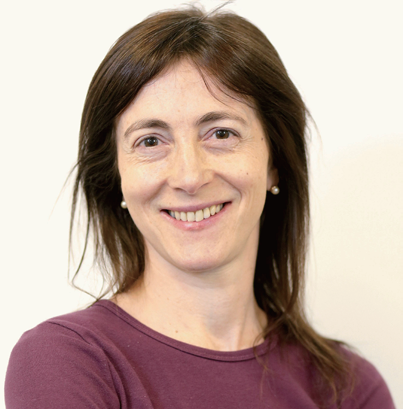
Figure 1 Dr. Noemi Lois.
YKXB: What do you think of this symposium?
Dr. Lois: I really enjoy this symposium. I think it is informative. I also enjoy the lectures presented by the experts. I learnt a lot from it.
YKXB: Could you brief us the status quo of the diabetic retinopathy?
Dr. Lois: For many years, many researches have invested plenty of time to figure out why the disease occurs, why some patients are more severe than others. Despite of these researches, we still don’t fully understand why this happens. Therefore, more researches are required to be conducted to help us understand better about the diabetic retinopathy. I think we still have a lot of things to do.
YKXB: Could you share with us the recent research advances in diabetic retinopathy?
Dr. Lois: Sure. First of all, the diabetic retinopathy screening program is running more successful in many countries now. With the help of it, we are able to identify the disease earlier. Secondly, more treatments are available for the patients. We could try to identify the kinds of therapies that an individual might respond better. Also, there is a progress in the understanding about the cause of the disease.
YKXB: How to prevent diabetic retinopathy complication in your opinion?
Dr. Lois: Prevention is one of the major things. We should ffnd a less costly treatment without major risks for the patients, which is also hopefully effective to those people who are in higher risk in blindness. We should also do more studies on prevention of the development of complication in patients.
YKXB: What is your opinion about treatment of diabetic retinopathy?
Dr. Lois: Now, we have better treatment than we used to have. However, even with the treatment that could be offered, only about 50–60% of patients have improvement in their conditions. We still need to do a lot of work to find a better, more friendly treatment.
YKXB: Why did you choose to be an ophthalmologist?
Dr. Lois: Well, I became interested in ophthalmology quite early on. It can be traced back to the time when I began to study medicine. I thought it was very attractive. I always liked surgery and the medical aspects of ophthalmology. I think the medical aspects of ophthalmology is a very challenging field, which I am now still working on. Ophthalmology allows me to do surgery and to conduct researches on medical aspects of ophthalmology. For more details about this interview, readers can refer to the following video (Figure 2).
 Figure 2 Noemi Lois: recent advances on diabetic retinopathy (1).
Available online: http://www.asvide.com/articles/1157
Figure 1 Dr. Noemi Lois.
YKXB: What do you think of this symposium?
Dr. Lois: I really enjoy this symposium. I think it is informative. I also enjoy the lectures presented by the experts. I learnt a lot from it.
YKXB: Could you brief us the status quo of the diabetic retinopathy?
Dr. Lois: For many years, many researches have invested plenty of time to figure out why the disease occurs, why some patients are more severe than others. Despite of these researches, we still don’t fully understand why this happens. Therefore, more researches are required to be conducted to help us understand better about the diabetic retinopathy. I think we still have a lot of things to do.
YKXB: Could you share with us the recent research advances in diabetic retinopathy?
Dr. Lois: Sure. First of all, the diabetic retinopathy screening program is running more successful in many countries now. With the help of it, we are able to identify the disease earlier. Secondly, more treatments are available for the patients. We could try to identify the kinds of therapies that an individual might respond better. Also, there is a progress in the understanding about the cause of the disease.
YKXB: How to prevent diabetic retinopathy complication in your opinion?
Dr. Lois: Prevention is one of the major things. We should ffnd a less costly treatment without major risks for the patients, which is also hopefully effective to those people who are in higher risk in blindness. We should also do more studies on prevention of the development of complication in patients.
YKXB: What is your opinion about treatment of diabetic retinopathy?
Dr. Lois: Now, we have better treatment than we used to have. However, even with the treatment that could be offered, only about 50–60% of patients have improvement in their conditions. We still need to do a lot of work to find a better, more friendly treatment.
YKXB: Why did you choose to be an ophthalmologist?
Dr. Lois: Well, I became interested in ophthalmology quite early on. It can be traced back to the time when I began to study medicine. I thought it was very attractive. I always liked surgery and the medical aspects of ophthalmology. I think the medical aspects of ophthalmology is a very challenging field, which I am now still working on. Ophthalmology allows me to do surgery and to conduct researches on medical aspects of ophthalmology. For more details about this interview, readers can refer to the following video (Figure 2).
Available online: http://www.asvide.com/articles/1157
基金
暂无基金信息
参考文献
1. Ye A. Noemi Lois: recent advances on diabetic retinopathy. Asvide 2016;3:383. Available online: http://www.asvide.com/articles/1157
相关文章
Shao-Wei Weng;Tzu-Lun Huang;Pei-Yuan Su;Pei-Yao Chang;Jia-Kang Wang,Intravitreal aflibercept for rubeosis iridis secondary to proliferative diabetic retinopathyJing Zang;Guoqi Guan,Study of Pigment Epithelium-derived Factor in Pathogenesis of Diabetic RetinopathyNicolas A. Yannuzzi;William E. Smiddy,Patient-centered outcomes in treatment options for proliferative diabetic retinopathy