





HIGHLIGHTS
INTRODUCTION
LLMs have been put to the tested for a variety of clinical tasks, including disease detection, medicine prescription, the creation of operational and discharge notes, and responding to patients’ inquiries. As a relatively novel topic, there are limited bibliometric analyses on LLM-related medical research. Moreover, most researchers tend to adopt a broad scope rather than focusing on specific medical specialties.[3] There have been bibliometric analyses on AI in ophthalmology[4] or AI in specific ophthalmology fields, such as cataracts and myopia.[5,6] However, at present, there are no bibliometric analyses that specifically highlight LLMs in ophthalmology.
METHODS
Data source and search strategy
Screening strategy
Statistical analysis
RESULTS
Characteristics of publications
Figure 2 illustrates the monthly fluctuations in article publication. There was a notable peak in June 2024, with 44 articles accounting for 15.9% (44/277) of all papers. Smaller peaks were also observed in December 2023 and October 2024.
The top 10 journals (Figure 3) started publishing articles in this field in 2023, except for the British Journal of Ophthalmology, which had its first relevant publication in 2022. The number of publications from these journals has increased from 2023 to 2025, showing a positive trend. In particular, the British Journal of Ophthalmology experienced the largest percentage increase (1,300%).
The ranks based on impact factors differ from those based on the number of articles or local citations, with JAMA Ophthalmology, Journal of Medical Internet Research, and Investigative Ophthalmology & Visual Science occupying the top ranks.
Frequent international collaborations are evident in this field, with a total of 191 inter-country links (Figure 4). The most prominent collaborations include those between USA and Singapore (12 articles), China and Singapore (12 articles), USA and United Kingdom (11 articles), USA and United Kingdom and Singapore (10 articles) and USA and China (10 articles).
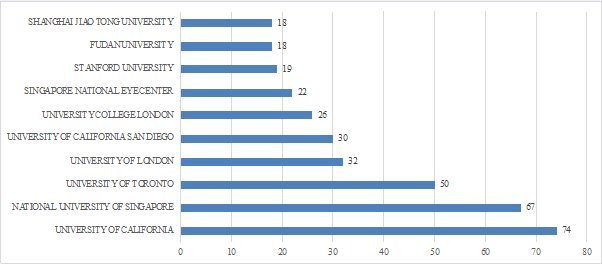
The articles in this analysis originated from 431 institutions. The top 10 contributing institutions (Figure 5) are from USA, Singapore, Canada, the United Kingdom and China, which corresponds to the top 5 contributing countries in this field. The University of California, National University of Singapore and University of Toronto ranked highest with 74, 67 and 50 articles respectively.
Citations
Research domains
DISCUSSION
Characteristics of publications
The earliest publications in this area focused on two main aspects: 1) knowledge assessment of LLMs, demonstrating that ChatGPT could correctly answer approximately half of the multiple-choice ophthalmology exam questions;[12,15] and 2) the potential and associated concerns of applying LLM in ophthalmic clinical, education, and research settings.[11] Over the years, researchers have continued to evaluate the performance of LLMs in ophthalmology professional examinations. As the accuracy of LLMs has improved, the research focus has gradually shifted towards their application in clinical practice, ranging from relative simple knowledge-retainment tasks, such as answering patients’ inquiries, to more challenging tasks like disease detection and diagnosis.[16,17] Knowledge assessments have also evolved from multiple-choice questions to open-ended questions that required LLMs to generate comprehensive and specific responses.[12] Since 2025, there has been further exploration into the ability of LLMs to integrate visual and textual data.[12] Given that these preliminary breakthroughs have not yet yielded promising results, it is anticipated that such research will continue to expand, with more clinical trials being conducted as LLMs strive to transform ophthalmological clinical practice in the foreseeable future.
The most productive researchers in this field are He Mingguang and Shi Danli. As members of the School of Optometry in Hong Kong Polytechnic University, their collaborative efforts in refining LLMs for the interpretation of various ophthalmic imaging modalities and question-answering, exemplified by programs like EyeGPT and FFA-GPT, [12] indicate a new trend from May 2024 towards engaging LLMs in multimodal tasks. Their contributions may have played a significant role in a 7-fold increase in cumulative publications in China from 2023 to 2025, enabling China to become the country with 2nd highest number of relevant publications in this field.
The geographic distribution of publications is highly uneven, with high-income economies, as classified by the World Bank,[18] dominating the field. LLM research demands advanced network infrastructure and well-organized medical datasets, which low-income countries may lack due to limited access to advanced technology and well-structured healthcare databases. However, China and India are exceptions, as their large populations provide substantial patient sample sizes for conducting LLM-related research.
The ranking for top-producing and top-cited journals does not align with their impact factors, as shown in Figure 3. One possible reason is that the number of published articles and citations for the journals in our dataset (n=277) is calculated within this specific set, whereas impact factors take into account all articles published by each journal. Journals with a longer history of establishment and a more rigorous peer review process, such as JAMA Ophthalmology, may enjoy higher prestige and reliability compared to newer journals like Eye, and thus have higher impact factors.
A comparison between the publication characteristics of ophthalmology-related LLM research and the overall trends in LLM research reveals several notable insights. The broader field of LLM research experienced a sharp increase in publications between 2019 and 2020, followed by steady growth through 2023.[19] This surge coincides with rapid advancements in model architectures, training strategies, and the increasing availability of large datasets and computational resources. In contrast, ophthalmology-related LLM publications first appeared around 2019 but only showed a remarkable acceleration from 2023 to 2024. This lag likely reflects the translational gap between foundational technical innovations and their clinical adoption. The application of LLMs and natural language processing (NLP) techniques in healthcare settings requires additional time for validation, regulatory approval, and integration into clinical workflows, which explains the delayed uptake. The top collaborating countries in LLM research are USA, England, India, and Canada, which is similar to the situation in ophthalmology, except for India. This discrepancy may be due to India's unique research focus, which often emphasizes socially and humanitarian-centered applications of LLMs, such as language accessibility and public health, rather than specialized clinical fields like ophthalmology. Moreover, differences in resource allocation and healthcare infrastructure across countries may influence the extent of clinical LLM research in ophthalmology. These observations underscore the complex ecosystem of LLM research, where technological breakthroughs precede clinical translation, and geographical research emphases reflect broader socio-economic and healthcare priorities. As LLM capabilities continue to evolve, as evidenced by recent advances in reasoning models and multimodal integration, future ophthalmology research is expected to accelerate, potentially narrowing this translational gap.
Citations
Research domains
Incorporating LLMs into clinical practice
Applications of generative AI in ocular imaging are an emerging hotspot for ophthalmology, but only 28 articles have tested the ability of LLMs to handle visual data inputs, such as interpreting retinal photographs and making subsequent diagnoses. Multimodal LLMs are still in their infancy and have generated mediocre outcomes, such as a 50.7% accuracy in the diagnosis of retinal cases [22]. Since ophthalmology relies heavily on the analysis of ocular imaging, including optical coherence tomography (OCT) and fundus photographs, future research should concentrate on making task-specific refinements to multimodal LLMs, such as GPT-4V, to improve their diagnostic abilities. Other applications of image interpretation, such as predictions of disease progression or treatment response, should also be explored. Although LLMs are not designed for image analysis, unlike computer vision models, they can engage in a variety of clinical applications (not task-specific) and are conveniently available online, thus can be adopted into healthcare more efficiently. Aside from improving their accuracy, researchers have sought to expand LLM applications to non-English-speaking countries, such as ChatFFA.[22]
LLMs may also assist ophthalmologists in implementing treatment plans for patients. Since human knowledge and memory may be limited, and human judgment may be skewed or not sufficiently thorough, suggestions from LLMs may enhance clinical outcomes. Studies have shown how ChatGPT-4 selected appropriate surgical procedures and choices of intraocular tamponade for patients with retinal detachment,[23] and outperformed ophthalmologists in generating an assessment and management plan for glaucoma and retinal cases.[24]
Educating patients and medical personnel
Furthermore, medical education is important for the cultivation of medical students and ophthalmologists alike. Although textbooks and websites offer a plethora of information, it may be difficult to obtain the most relevant source, especially for ophthalmologists, as patients have specific needs and anatomical variations. Seygi et al.[28] developed 3 GPTs for ophthalmic education: ‘EyeTeacher’, which explains concepts using a Q&A method; ‘EyeAssistant’, which answers ophthalmologists’ inquiries regarding patient management; and “The GPT for GA”, a clinical assistant specific to geographic atrophy. The release of custom GPTs enables users to modify GPTs with natural language processing and create novel GPTs for specific educational purposes. Hence, LLMs can facilitate patient care by compensating for the knowledge gaps of medical personnel.
Management and quality-control of LLMs
Limitations
In conclusion, LLMs hold great promise for streamlining administrative tasks and supporting ophthalmologists in diagnosis and decision-making. However, issues such as hallucinations and cybersecurity must be addressed, and rigorous testing is required before their clinical use. Future research should focus on bridging the gap between research and clinical application, especially in the field of ocular images.
Table 1 Top 8 authors with the most publications in LLMs in ophthalmology
|
Authors |
Articles |
Articles Fractionalized |
Rank based on citations |
Total citations |
G-index based on citations |
|
|
1 |
He Mingguang |
9 |
1.046 |
1 |
74 |
8 |
|
2 |
Shi Danli |
9 |
1.256 |
7 |
32 |
5 |
|
3 |
Chen Xiaolan |
8 |
1.131 |
7 |
32 |
5 |
|
4 |
Tham Yih Chung |
8 |
1.567 |
1 |
66 |
8 |
|
5 |
Zhang Weiyi |
8 |
1.006 |
6 |
24 |
4 |
|
6 |
Delsoz Mohammad |
7 |
0.880 |
3 |
88 |
7 |
|
7 |
Madadi Yeganeh |
7 |
0.880 |
3 |
88 |
7 |
|
8 |
Yousefi Siamak |
7 |
0.880 |
3 |
88 |
7 |
Table 2 Top 10 cited articles in LLMs in ophthalmology
|
Corresponding author |
Journal |
Publication year |
Number of citations |
|
|
Evaluating the Performance of ChatGPT in Ophthalmology |
R. Duval |
Ophthalmology Science |
2023 |
224 |
|
Performance of an Artificial Intelligence chatbot in Ophthalmic Knowledge Assessment |
R. H. Muni |
Jama Ophthalmology |
2023 |
163 |
|
Benchmarking large language models' performances for myopia care: a comparative analysis of ChatGPT-3.5, ChatGPT-4.0, and Google Bard |
Y.C. Tham |
eBioMedicine |
2023 |
140 |
|
Appropriateness and Readability of ChatGPT-4-Generated Responses for Surgical Treatment of Retinal Diseases |
A.E. Kuriyan |
Ophthalmology Retina |
2023 |
95 |
|
ChatGPT and Ophthalmology: Exploring Its Potential with Discharge Summaries and Operative Notes |
M.J. Ali |
Seminars in Ophthalmology |
2023 |
90 |
|
Comparison of Ophthalmologist and Large Language Model Chatbot Responses to Online Patient Eye Care Questions |
S.Y. Wang |
JAMA Network Open |
2023 |
86 |
|
Performance of Generative Large Language Models on Ophthalmology Board-Style Questions |
L.Z. Cai |
American Journal of Ophthalmology |
2023 |
71 |
|
Artificial Intelligence in Ophthalmology: A Comparative Analysis of GPT-3.5, GPT-4, and Human Expertise in Answering StatPearls Questions |
M. Moshirfar |
Cureus Journal of Medical Science |
2023 |
64 |
|
New meaning for NLP: the trials and tribulations of natural language processing with GPT-3 in ophthalmology |
P.A. Keane |
British Journal of Ophthalmology |
2022 |
58 |
|
The Use of ChatGPT to Assist in Diagnosing Glaucoma Based on Clinical Case Reports |
S. Yousefi |
Ophthalmology and Therapy |
2023 |
56 |
Table 3 6 major clusters in keyword co-occurrence network
|
Cluster category |
Colour |
Number of keywords |
Examples of keywords |
|
|
1 |
clinical practice |
red |
15 |
diagnosis, imaging, management |
|
2 |
management of LLMs |
green |
12 |
accuracy, quality, reliability |
|
3 |
health and ophthalmic conditions |
blue |
11 |
keratoconus, myopia, retina |
|
4 |
patient education |
yellow |
7 |
health literacy, education materials, patient education |
|
5 |
large fundamental ideas |
purple |
6 |
artificial intelligence, large language model, telemedicine |
Figure 1 PRISMA flow diagram detailing the searching and screening process
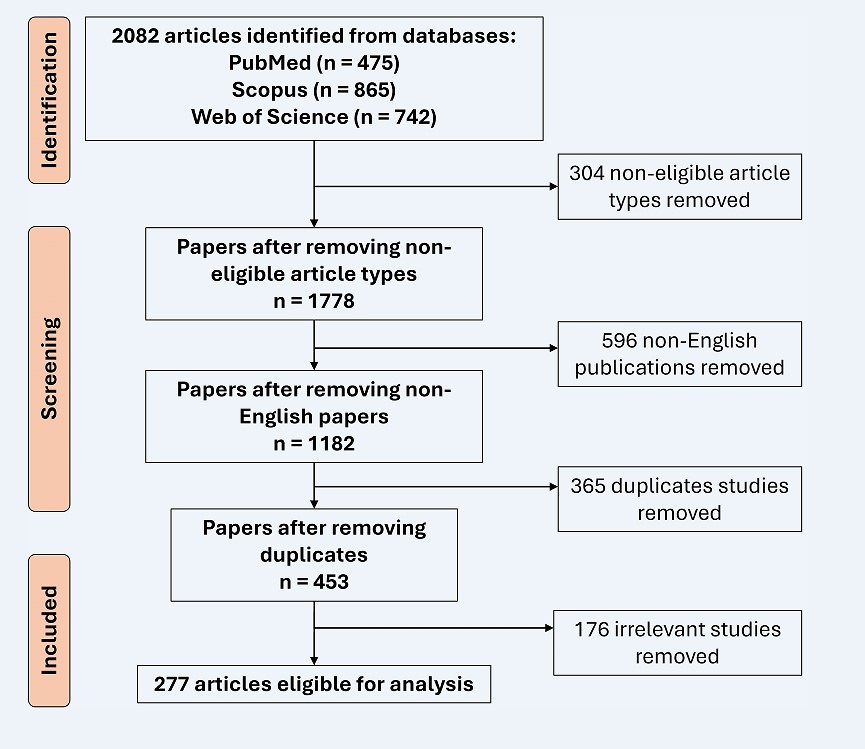
Figure 2 Graph showing monthly publications output from 2021 to 2025
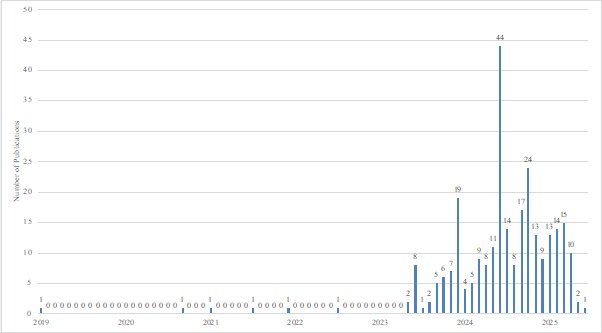
Monthly intervals are used to allow for a more meaningful analysis of a temporal scale, as LLM is a relatively novel topic in the field of ophthalmology.
Figure 3 Graph of the top 10 journals with the most publications in LLMs in ophthalmology
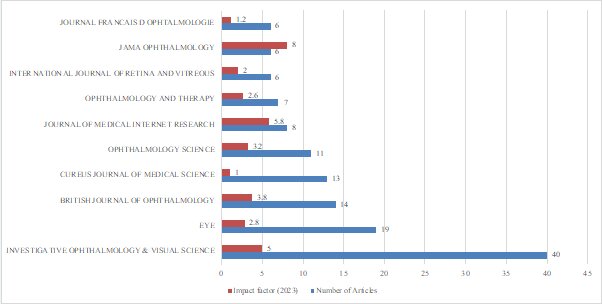
Figure 4 Choropleth map showing the inter-country collaborations of publications in LLMs in ophthalmology
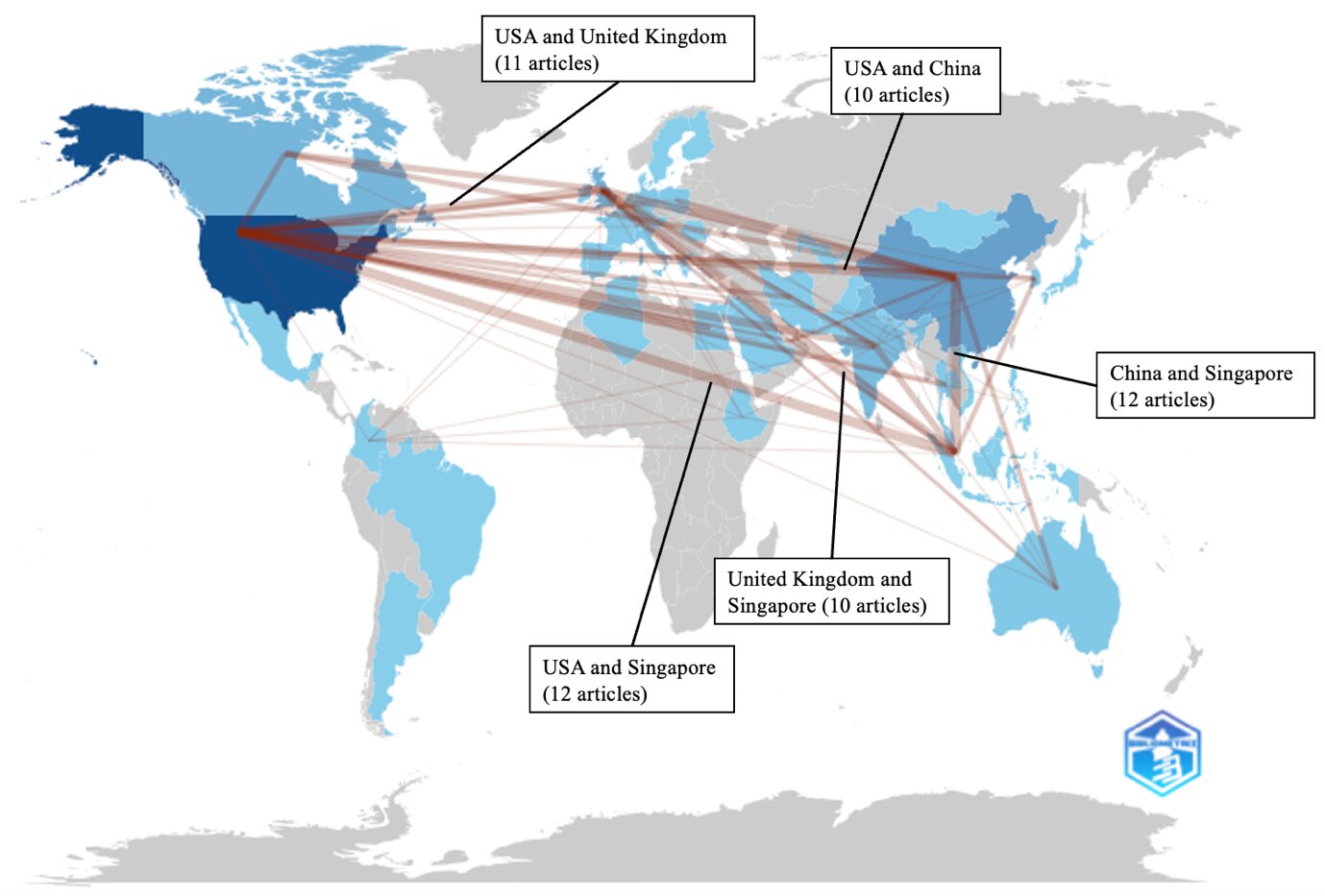
A darker shade of blue indicates higher degree of collaboration. Grey colour indicates no publications. The thickness of the connecting lines is proportional to the number of collaborations between the two connected countries. The most prominent collaborations are labelled.
Figure 5 Graph of the top 10 affiliations with most publications in LLMs in ophthalmology
Correction Notice
Acknowledgements
Author Contributions
Conflict of Interests
Patient Consent for Publication
Ethical Statement
Provenance and Peer Review
This article was a standard submission to our journal. The article has undergone peer review with our anonymous review system.Data Sharing Statement
Open Access Statement
Supplementary Materials
Supplementary Table 1 The search strategy for Scopus, PubMed, and Web of Science (As of 24th April 2025)
|
Search string |
Result |
|
|
Scopus |
TITLE-ABS-KEY ( "ophthalm*" OR "ocular" OR "optic" OR "eye disease*" OR "orbital disease*" OR "retina" OR "Graves Ophthalmopathy" OR "Retinal disease*" OR "Acute Retinal necrosis" OR "Diabetic Retinopathy" OR "Orbital Lymphoma" OR "Optic Nerve" OR "Dry Eye" OR "Asthenopia" OR "Conjunctival disease*" OR "optic neuropathy" OR "Uveal Disease*" OR "Eye Neoplasm" OR "Eyelid Disease*" OR "Eye Hemorrhage" OR "Scleral Disease*" OR "thyroid-associated ophthalmopathy" OR "acute optic neuritis" OR "Age-Related Macular Degeneration" OR "Retinal Necrosis Syndrome" OR "glaucoma" OR "cataract" OR "myopia" OR "strabismus" OR "retinoblastoma" OR "amblyopia" ) AND TITLE-ABS-KEY ( "large language model*" OR "natural language processing" OR "ChatGPT" OR "chatbot*" OR "GPT" OR "OpenAI" OR ( "Google" AND "BERT" ) OR ( "Anthropic" AND "Claude" ) OR ( "Meta" AND "LLaMA" ) OR ( "Stanford"AND "Alpaca" ) ) |
865 |
|
PubMed |
("ophthalm*"[Title/Abstract] OR "ocular"[Title/Abstract] OR "optic"[Title/Abstract] OR "eye disease*"[Title/Abstract] OR "orbital disease*"[Title/Abstract] OR "retina"[Title/Abstract] OR "Graves Ophthalmopathy"[Title/Abstract] OR "Retinal disease*"[Title/Abstract] OR "Acute Retinal necrosis"[Title/Abstract] OR "Diabetic Retinopathy"[Title/Abstract] OR "Orbital Lymphoma"[Title/Abstract] OR "Optic Nerve"[Title/Abstract] OR "Dry Eye"[Title/Abstract] OR "Asthenopia"[Title/Abstract] OR "Conjunctival disease*"[Title/Abstract] OR "optic neuropathy"[Title/Abstract] OR "Uveal Disease*"[Title/Abstract] OR "Eye Neoplasm"[Title/Abstract] OR "Eyelid Disease*"[Title/Abstract] OR "Eye Hemorrhage"[Title/Abstract] OR "Scleral Disease*"[Title/Abstract] OR "thyroid- associated ophthalmopathy"[Title/Abstract] OR "acute optic neuritis"[Title/Abstract] OR "Age-Related Macular Degeneration"[Title/Abstract] OR "Retinal Necrosis Syndrome"[Title/Abstract] OR "glaucoma"[Title/Abstract] OR "cataract"[Title/Abstract] OR "myopia"[Title/Abstract] OR "strabismus"[Title/Abstract] OR "retinoblastoma"[Title/Abstract] OR "amblyopia"[Title/Abstract]) AND ("large language model*"[Title/Abstract] OR "natural language processing"[Title/Abstract] OR "ChatGPT"[Title/Abstract] OR "chatbot*"[Title/Abstract] OR "GPT"[Title/Abstract] OR "OpenAI"[Title/Abstract] OR ("Google"[Title/Abstract] AND "BERT"[Title/Abstract]) OR ("Anthropic"[Title/Abstract] AND "Claude"[Title/Abstract]) OR ("Meta"[Title/Abstract] AND "LLaMA"[Title/Abstract]) OR ("Stanford"[Title/Abstract] AND "Alpaca"[Title/Abstract])) |
475 |
|
Web of Science |
(ALL=(“ophthalm*” OR “ocular” OR “optic” OR “eye disease*” OR “orbital disease*” OR “retina” OR “Graves Ophthalmopathy” OR “Retinal disease*” OR “Acute Retinal necrosis” OR “Diabetic Retinopathy” OR “Orbital Lymphoma” OR “Optic Nerve” OR “Dry Eye” OR “Asthenopia” OR “Conjunctival disease*” OR “optic neuropathy” OR “Uveal Disease*” OR “Eye Neoplasm” OR “Eyelid Disease*” OR “Eye Hemorrhage” OR “Scleral Disease*” OR “thyroid-associated ophthalmopathy” OR “acute optic neuritis” OR “Age-Related Macular Degeneration” OR “Retinal Necrosis Syndrome” OR “glaucoma” OR “cataract” OR “myopia” OR “strabismus” OR “retinoblastoma” OR |
742 |
Supplemental Table 2 Top 9 articles in LLMs in ophthalmology based on total link strength values in co-citation network.
Supplemental Figure 1 Co-citation network of publications in LLMs in ophthalmology
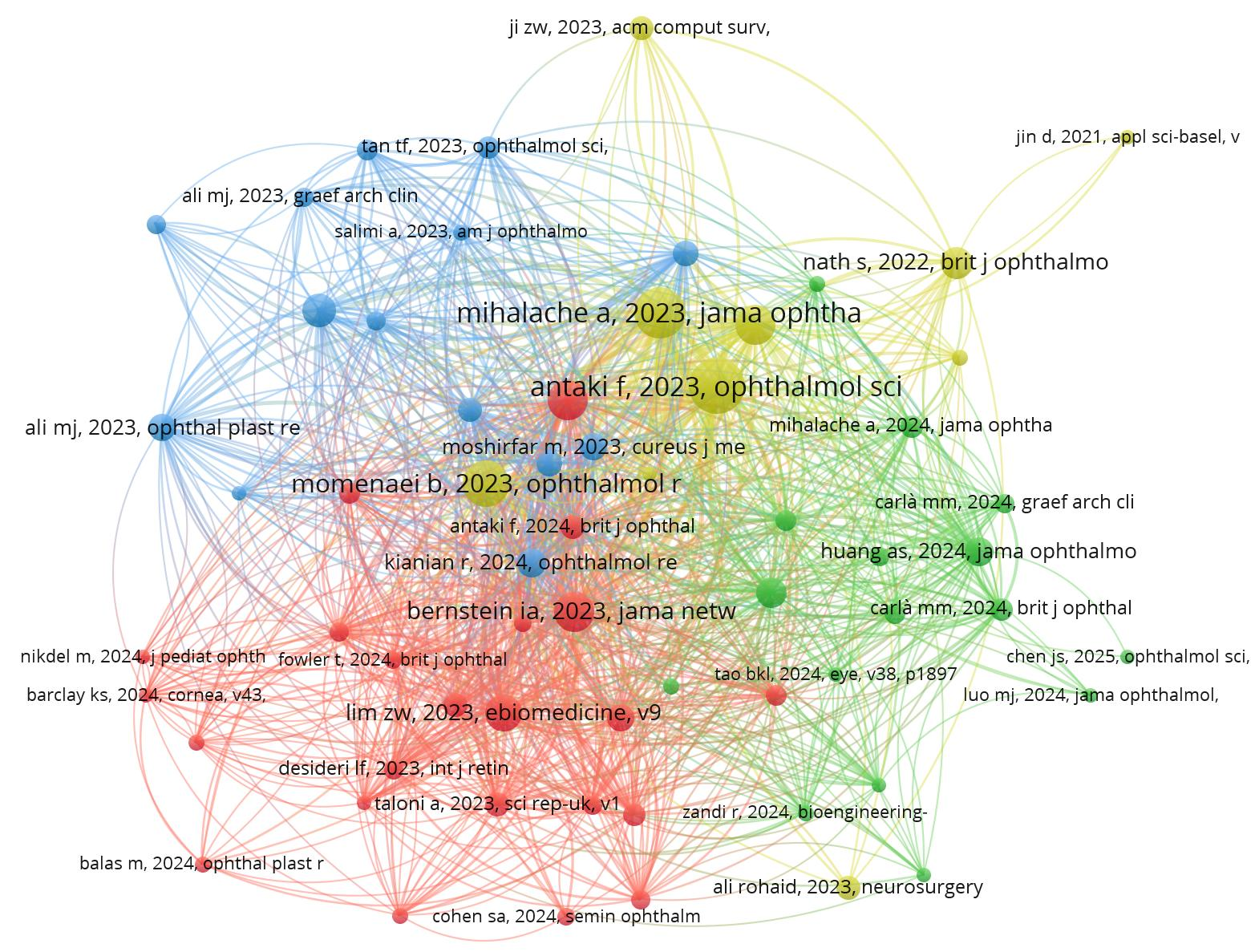
Threshold: frequency ≥ 5; Number of nodes: 63; Number of edges: 1,537; Total link strength: 4,615.
Supplemental Figure 2 Keyword co-occurrence network on LLMs in ophthalmology
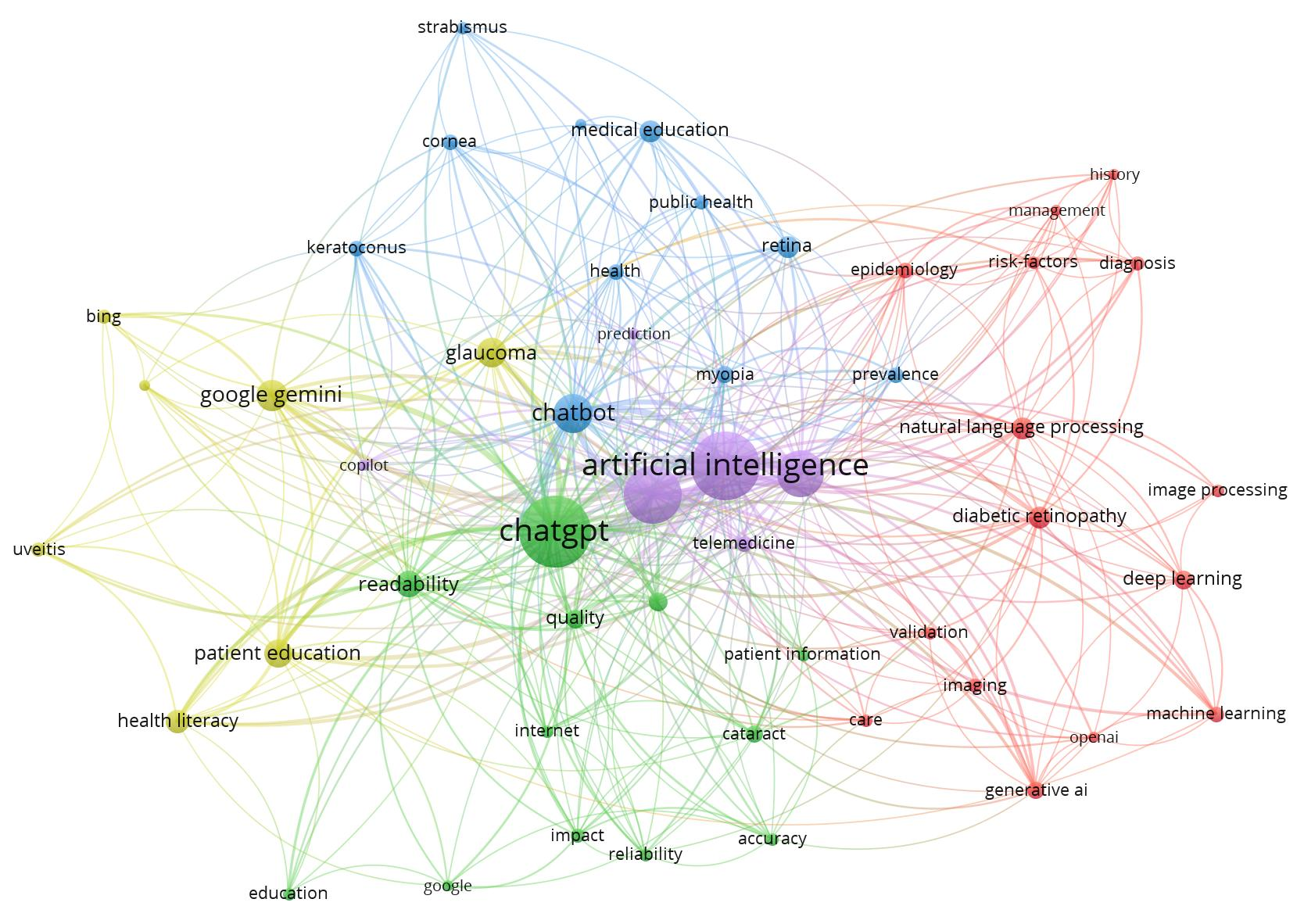
Threshold: frequency ≥ 3; Number of nodes: 51; Number of edges: 408; Total link strength: 1,247.