“Be exact in diagnosis and accurate in treatment”—Exploration and analysis of construction of characteristic diagnosis and treatment platform for dry eye in Peking University Third Hospital under the background of precision medicine
Views:
25440
DOI:
10.3978/j.issn.1000-4432.2021.03.05
Publication Date:
2023/05/12
Author(s):
DONG Ruilan, ZHOU Yilin, YUAN Hao, JIANG Xiaotong, ZHANG Kexin, XIA Huaqin, YANG Jiarui, LI Xuemin
DONG Ruilan, ZHOU Yilin, YUAN Hao, JIANG Xiaotong, ZHANG Kexin, XIA Huaqin, YANG Jiarui, LI Xuemin
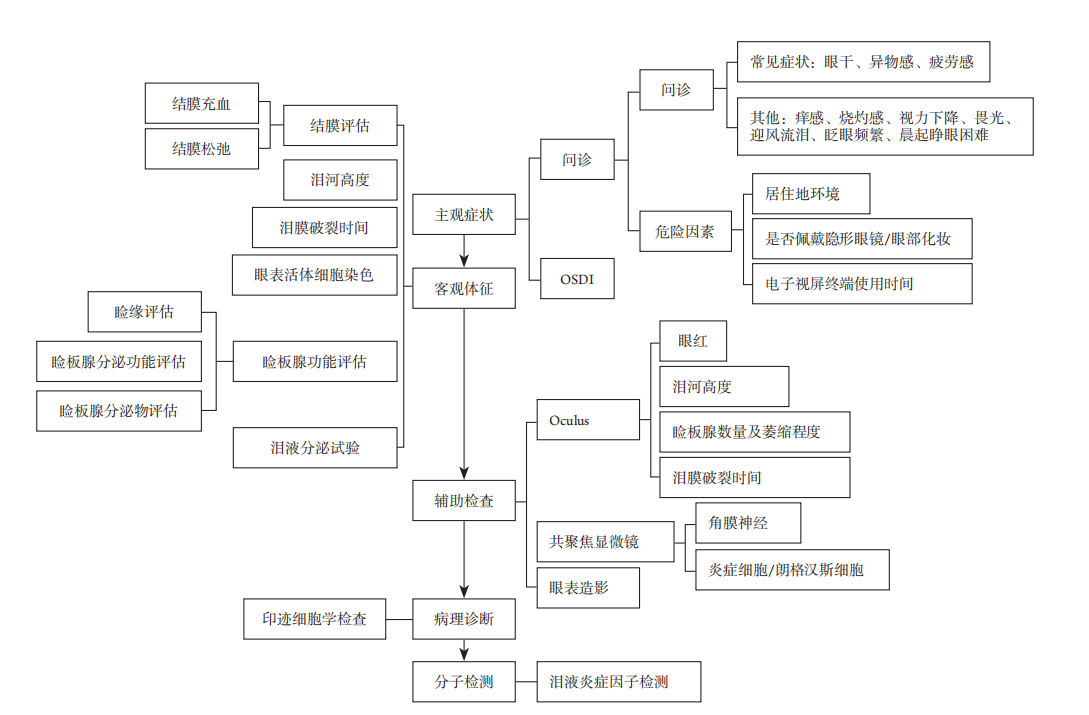
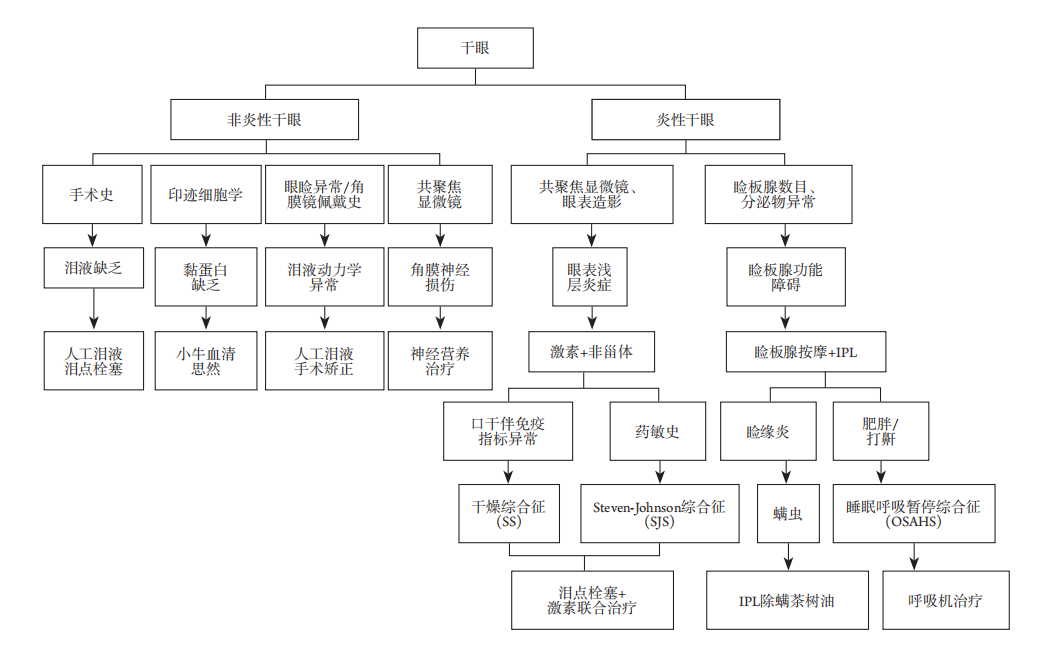
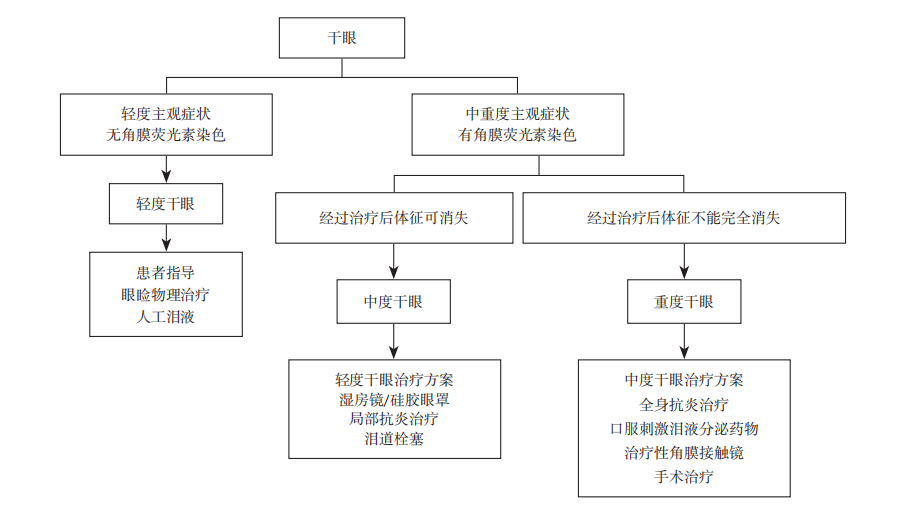
In the era of developing precision medicine, the Ophthalmic Center of Peking University Third Hospital has taken the lead in establishing a dry eye precision medical platform. By standardizing and optimizing the diagnosis and treatment process of dry eye, this center provides personalized treatment plan and prevention guidance for patients, effectively improves the accuracy of dry eye diagnosis and the effectiveness of treatment, at the same time,improves the reception efficiency of dry eye clinic, and improves the patient’s clinic experience. In this paper, the construction content, standardized inspection process and personalized diagnosis and treatment scheme of dry eye precision medicine platform system will be described. Combined with the actual clinical cases, the exploration of the Peking University Third Hospital in dry eye precision medicine will be comprehensively analyzed, and the future of dry eye precision medical platform will be prospected.
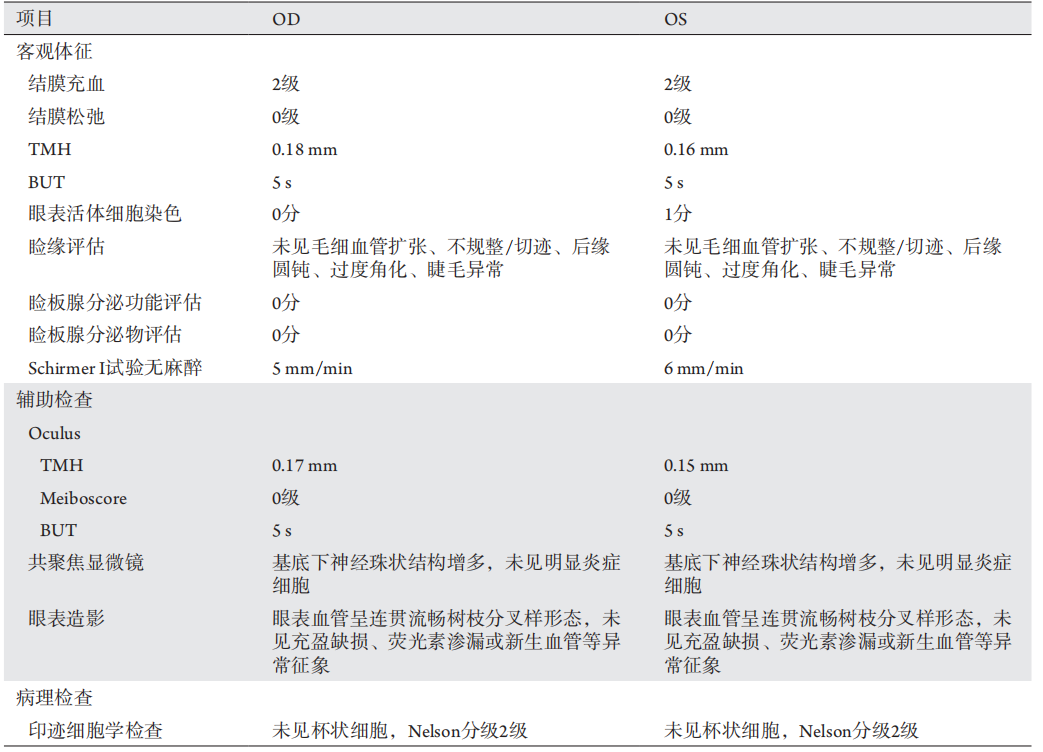
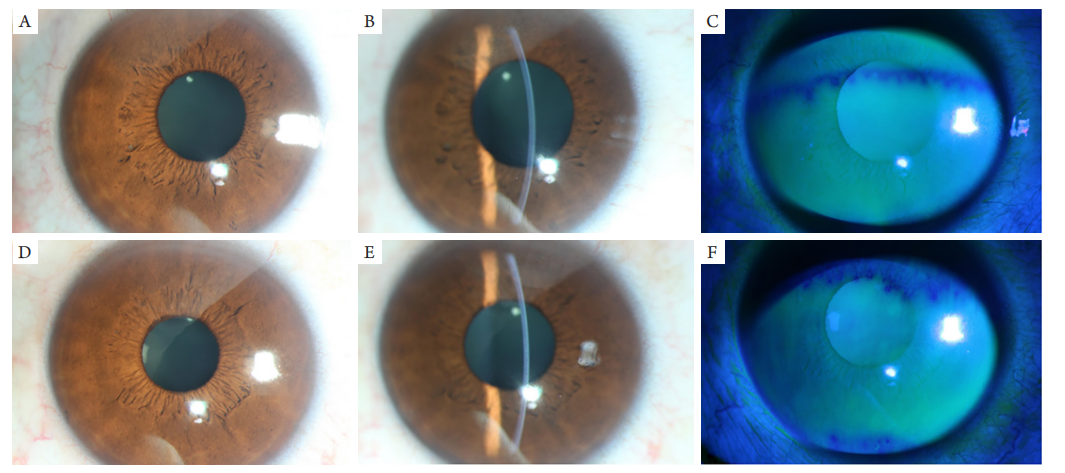
2017年国际泪膜和眼表协会干眼疾病工作组第2次会议(the Tear Film and Ocular Surface Society International Dry Eye Workshop II,TFOS DEWS II)[12]指出泪膜稳定性下降是干眼发病的核心环节,因此评估泪膜稳定性是干眼诊断的重要内容,泪膜破裂时间(break-up time,BUT)是干眼诊断中最常用的体征。BUT是指上一次完全眨眼至角膜上出现第1个黑点之间的时间间隔,可反映泪膜的稳定性。观测完泪河高度后,嘱患者瞬目3~4次,最后1次瞬目后自然睁眼平视,使用残存的荧光素继续测量BUT。BUT正常范围大于10 s,小于10 s考虑干眼可能,尤其在蒸发过强型干眼和VDT所致干眼中,BUT显著缩短。
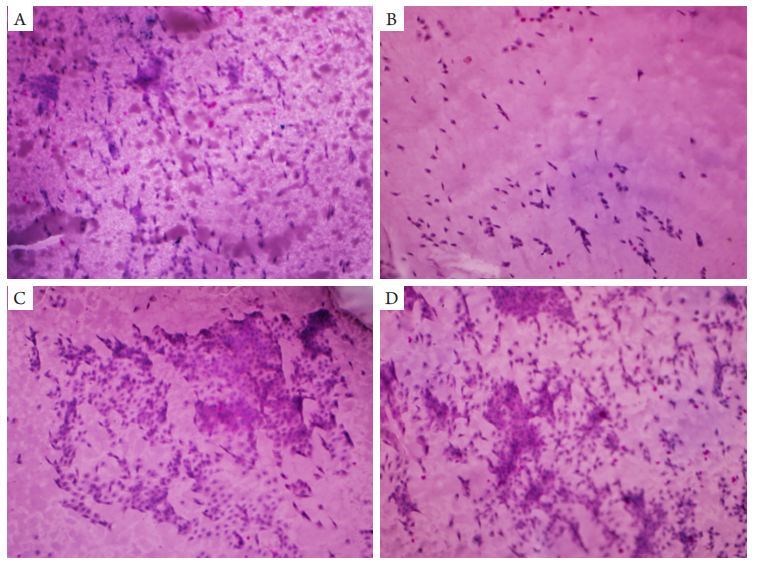
(A) Nasal OD (×100), (B) nasal OS (×100); (C) temporal OD (×200); (D) temporal OS (×100). No goblet cells were found in the nasal and temporal sides of both eyes, with Nelson grade 2.
首都卫生发展科研专项项目 (2018-2-4093)。 This work was supported by the Capital Health Development Research
Project, China (2018-2-4093).
References
Stapleton F, Alves M, Bunya VY, et al. TFOS DEWS II Epidemiology
Report[ J]. Ocul Surf, 2017, 15(3): 334-365.
中华医学会眼科分会角膜病学组。干眼临床诊疗专家共识
(2013年)[ J]. 中华眼科杂志, 2013, 49(1): 73-75.
Keratology Group, Ophthalmology Branch, Chinese Medical
Association. Expert consensus on clinical diagnosis and treatment
of dry eye (2013)[ J]. Chinese Journal of Ophthalmology, 2013,
49(1): 73-75.
National Research Council (US) Committee on A Framework for
Developing a New Taxonomy of Disease. The national academies
collection: reports funded by national institutes of health. toward
precision medicine: building a knowledge network for biomedical
research and a new taxonomy of disease[M]. Washington (DC):
National Academies Press (US), 2011.
付文华, 钱海利, 詹启敏. 中国精准医学发展的需求和任务[ J].
中国生化药物杂志, 2016, 36(4): 1-4.
FU WH, QIAN HL, ZHAN QM. Precision medicine in
china[ J]. Chinese Journal of Biochemical Pharmaceutics, 2016,
36(4): 1-4.
Terry SF. Advancing the precision medicine initiative[ J]. Cancer
Discov, 2015, 5(12): 1230.
孙晓东, 朱鸿. 重视精准医疗在眼科临床实践中的应用[ J]. 中华
眼科杂志, 2016, 52(2): 85-88.
SUN XD, ZHU H. Emphasis on the application of precision
medicine in ophthalmology[ J]. Chinese Journal of Ophthalmology,
2016, 52(2): 85-88.
Ozcura F, Aydin S, Helvaci MR. Ocular surface disease index for the
diagnosis of dry eye syndrome[ J]. Ocul Immunol Inflamm, 2007,
15(5): 389-393.
Institute of Eye Research. IER Grading Scales[M]. Sydney, Australia:
Institute for Eye Research, 2007.
H?h H, Schirra F, Kienecker C, et al. Lid-parallel conjunctival folds
are a sure diagnostic sign of dry eye[ J]. Ophthalmologe, 1995,
92(6): 802-808.
Wolffsohn JS, Arita R, Chalmers R, et al. TFOS DEWS II diagnostic
methodology report[ J]. Ocul Surf, 2017, 15(3): 539-574.
Bron A J, de Paiva CS, Chauhan SK , et al. TFOS DE WS II
pathophysiology report[ J]. Ocul Surf, 2017, 15(3): 438-510.
Craig JP, Nichols KK, Akpek EK, et al. TFOS DEWS II definition and
classification report[ J]. Ocul Surf, 2017, 15(3): 276-283.
Lekhanont K, Jongkhajornpong P, Sontichai V, et al. Evaluating dry eye
and meibomian gland dysfunction with meibography in patients with
Stevens-Johnson syndrome[ J]. Cornea, 2019, 38(12): 1489-1494.
Amparo F, Wang H, Emami-Naeini P, et al. The Ocular Redness Index:
a novel automated method for measuring ocular injection[ J]. Invest
Ophthalmol Vis Sci, 2013, 54(7): 4821-4826.
Tian L, Qu JH, Zhang XY, et al. Repeatability and reproducibility of
noninvasive keratograph 5M measurements in patients with dry eye
disease[ J]. J Ophthalmol, 2016, 2016: 8013621.
Arita R, Itoh K, Inoue K, et al. Noncontact infrared meibography to
document age-related changes of the meibomian glands in a normal
population[ J]. Ophthalmology, 2008, 115(5): 911-915.
Liu Y, Chou Y, Dong X, et al. Corneal subbasal nerve analysis using in
vivo confocal microscopy in patients with dry eye: analysis and clinical
correlations[ J]. Cornea, 2019, 38(10): 1253-1258.
Mitsui Y, Matsubara M, Kanagawa M. Fluorescence irido-corneal
photography[ J]. Br J Ophthalmol, 1969, 53(8): 505-512.
Meyer PA, Watson PG. Low dose fluorescein angiography of the
conjunctiva and episclera[ J]. Br J Ophthalmol, 1987, 71(1): 2-10.
Nelson JD, Havener VR, Cameron JD. Cellulose acetate impressions of
the ocular surface. Dry eye states[ J]. Arch Ophthalmol, 1983, 101(12):
1869-1872.
克里木江, 柯碧莲. 干眼病的眼表炎症机制研究进展[ J]. 世界临
床药物, 2012, 33(7): 426-430.
KELI MJ , KE BL. Recent progress in ocular surface
inflammatory pathogenesis of dry eye disease[ J]. World Clinical Drugs,
2012, 33(7): 426-430.
Yoon KC, De Paiva CS, Qi H, et al. Expression of Th-1 chemokines
and chemokine receptors on the ocular surface of C57BL/6 mice:
effects of desiccating stress[ J]. Invest Ophthalmol Vis Sci, 2007,
48(6): 2561-2569.
Sambursky R, O'Brien TP. MMP-9 and the perioperative management
of LASIK surgery[ J]. Curr Opin Ophthalmol, 2011, 22(4): 294-303.
Wei S, Ren X, Wang Y, et al. Therapeutic effect of intense pulsed
light (IPL) combined with meibomian gland expression (MGX) on
meibomian gland dysfunction (MGD)[ J]. J Ophthalmol, 2020, 2020:
3684963.
Yang J, Liu Y, Xu Y, et al. A new approach of ocular nebulization with
vitamin B12 versus oxytocin for the treatment of dry eye disease: an
in vivo confocal microscopy study[ J]. Drug Des Devel Ther, 2019, 13:
2381-2391.
Ren X , Chou Y, Jiang X , et al. Effects of oral vitamin B1 and
mecobalamin on dry eye disease[ J]. J Ophthalmol, 2020, 2020:
9539674.
Jiang X, Deng A, Yang J, et al. Pathogens in the Meibomian gland
and conjunctival sac: microbiome of normal subjects and patients
with Meibomian gland dysfunction[ J]. Infect Drug Resist, 2018,
11: 1729-1740.