





HIGHLIGHTS
Divided nevus of the eyelid is a congenital pigmented nevus that impacts eyelid function and aesthetics. Traditional carbon dioxide (CO₂) laser ablation is limited to small lesions, while surgical excision with flap transfer is the current treatment for large lesions. However, surgical interventions can result in visible color differences in skin, as well as complications such as ectropion and scar hyperplasia.
This study introduces ultrapulse CO₂ laser excision, a novel treatment method that enables complete excision of large divided nevi (25-50 mm) from their base, expanding the treatment indication of traditional laser ablation. The 12-month follow-up demonstrated 100% clearance, no recurrence, minimal complications, and high patient satisfaction. This technique simplifies the treatment procedure and accelerates patient recovery time.
Ultrapulse CO₂ laser excision is a promising treatment for large divided eyelid nevus, offering a simpler, more effective approach with fewer complications and faster recovery. The results of this study may encourage further research and clinical adoption of this technique as an alternative treatment choice for large divided nevi, potentially improving patient outcomes and satisfaction.
INTRODUCTION
In the present study, we conducted a retrospective analysis of 10 cases of divided nevus to evaluate the efficacy and safety of ultrapulse CO2 laser excision over a 12-month follow-up period, particularly for large lesions.
MATERIALS AND METHODS
Study Design and Participants
Data Collection
Laser Excision Technique
The ultrapulse CO₂ laser parameters were customized according to the specific characteristics of each lesion. The energy levels were adjusted between 100-200 mJ per pulse. The laser power was set within a range of 1.0-2.0 W, with a pulse duration of approximately 10 ms. The spot size was varied from 0.2 to 1 mm, depending on the lesion's size and location. The excision process commenced with a careful delineation of the treatment area. The laser was applied perpendicular to the skin surface, tracing the lesion's edge to create a well-defined base. The excision was performed along the marked base, with an additional 1 mm margin beyond the lesion's boundary to ensure complete removal and minimize the risk of recurrence. The depth of laser excision was set at 2 mm below the base of the divided nevus to ensure complete removal of the lesion. In cases where the lesion involved a depth greater than 2 mm, staged treatment was performed. (Figure 1)
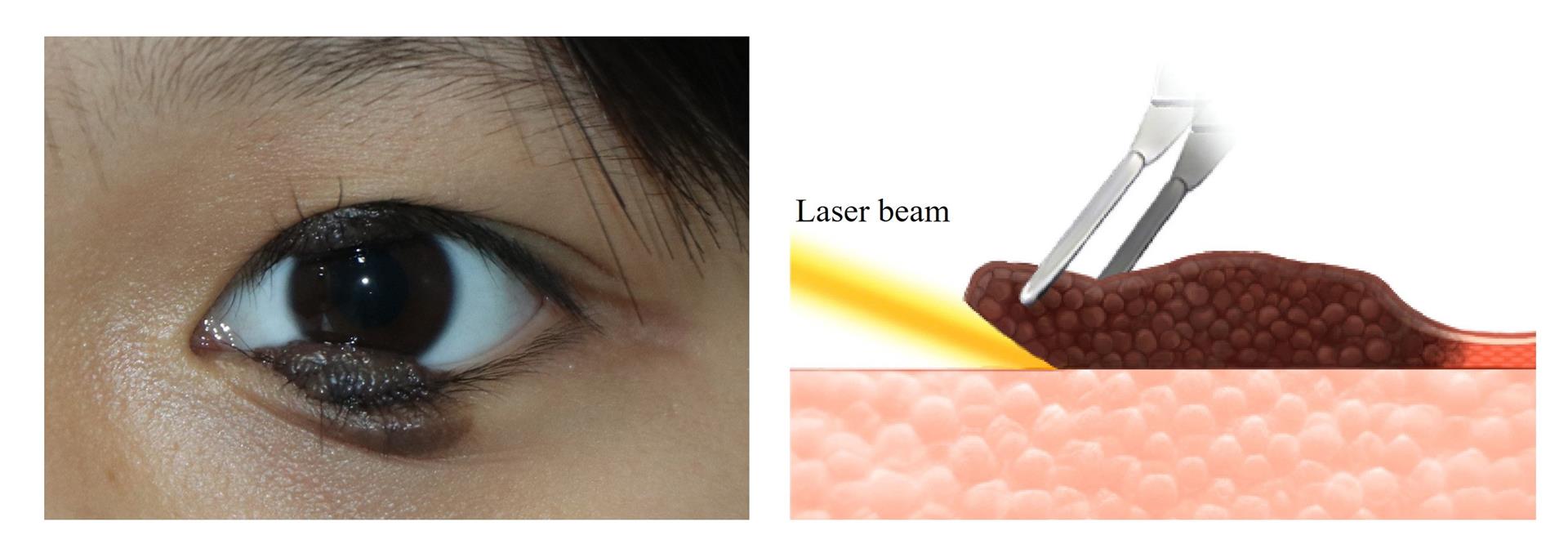
Figure 1 Laser excision technique for divided nevus of the eyelid
To prevent corneal thermal injury during the laser treatment, patients were instructed to keep their eyes closed, and in cases where the patient needed to keep their eyes open, a large metal blade was placed between the eyelid and the eyeball to protect the ocular surface. Further pathology examination was conducted to confirm pathological type.
After the procedure, the wound should be kept clean and dry. Tobramycin ointment and deproteinized calf blood extract eye gel were applied twice a day for 1-2 weeks.
Outcome Assessments
Statistical Analysis
RESULTS
Efficacy outcomes
Table 1. Patient demographics and treatment outcomes.
|
Patient NO. |
Age (years) |
Sex |
Rt/Lt |
Upper Size (mm) |
Lower Size (mm) |
Lesion diameters (mm) |
Height (mm) |
No. of sessions |
Involvement |
Clearance |
Recurrence |
Complications |
Patient Satisfaction |
|
1 |
22 |
M |
R |
25 x 20 |
13 x 15 |
38 |
2 |
3 |
Eyelid margin |
100% |
n/a |
Partial absent eyelashes, hyperpigmentation |
Very satisfied |
|
2 |
9 |
M |
L |
15 x 6 |
15 x 3 |
30 |
3 |
1 |
Eyelid margin |
100% |
n/a |
Partial absent eyelashes |
Very satisfied |
|
3 |
24 |
F |
R |
30 x 25 |
5 x 3 |
35 |
5 |
5 |
Eyelid margin |
100% |
n/a |
Partial absent eyelashes, hyperpigmentation |
Very satisfied |
|
4 |
22 |
M |
L |
20 x 8 |
5 x 3 |
25 |
4 |
2 |
Eyelid margin |
100% |
n/a |
Eyelid trichiasis |
Very satisfied |
|
5 |
11 |
M |
R |
12 x 13 |
17 x 26 |
39 |
0.3 |
4 |
Eyelid margin |
100% |
n/a |
Partial absent eyelashes |
Very satisfied |
|
6 |
16 |
F |
L |
15 x 9 |
20 x 18 |
35 |
5 |
2 |
Eyelid margin |
100% |
n/a |
n/a |
Very satisfied |
|
7 |
17 |
M |
R |
15 x 22 |
5 x 3 |
25 |
2 |
3 |
Eyelid margin Medial canthus |
100% |
n/a |
Partial absent eyelashes |
Very satisfied |
|
8 |
30 |
F |
L |
6 x 22 |
10 x 3 |
25 |
6 |
2 |
Eyelid margin, Lateral canthus |
100% |
n/a |
Partial absent eyelashes |
Very satisfied |
|
9 |
54 |
F |
L |
20 x 10 |
18 x 22 |
38 |
6 |
4 |
Eyelid margin |
100% |
n/a |
Partial absent eyelashes |
Very satisfied |
|
10 |
32 |
F |
R |
30 x 15 |
20 x 15 |
50 |
6 |
4 |
Eyelid margin |
100% |
n/a |
Partial absent eyelashes |
Very satisfied |
M: Male; F: Female; R: Right; L: Left
Post-treatment complications
Patient Satisfaction
Case Illustrations
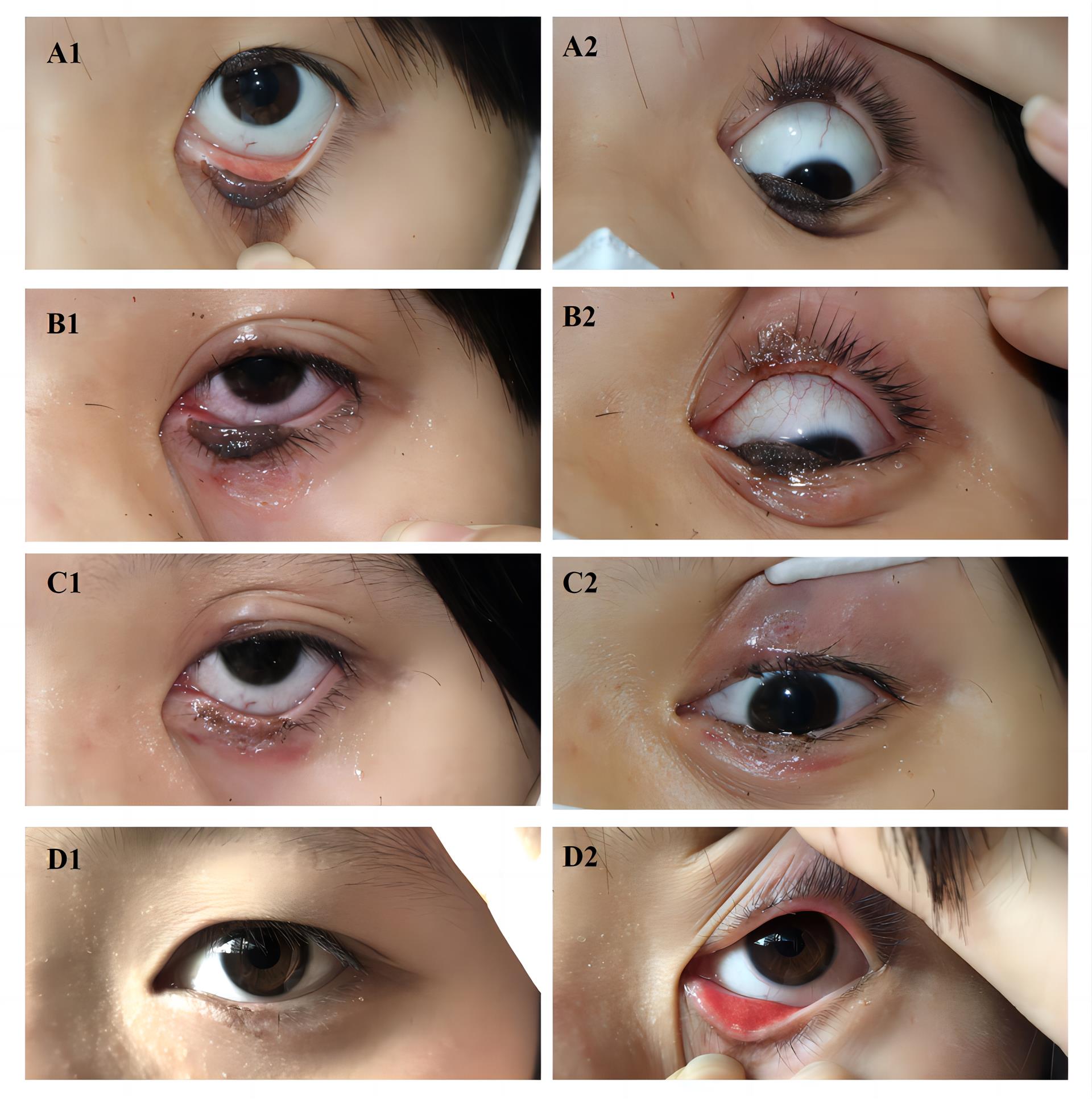
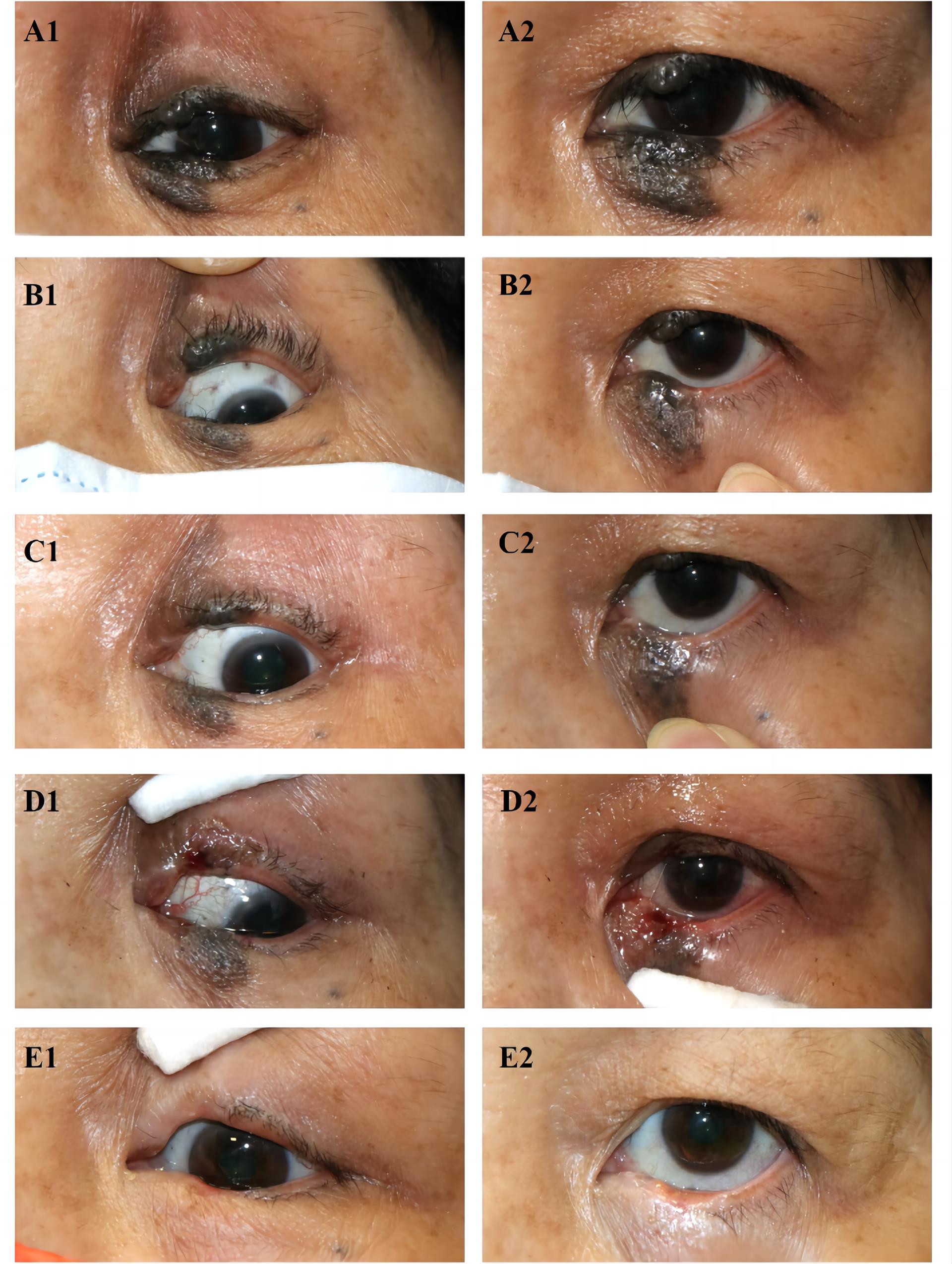
DISCUSSION
CONCLUSIONS
Correction notice
Acknowledgement
Author Contributions
Conflict of Interests
Patient consent for publication
Ethical Statement
Provenance and Peer Review
Data Sharing Statement
Open Access Statement
Supplementary table 1 Sizes of Lesions Removed in Each Treatment Session
|
|
|||||||
|
Patient NO. |
Follow up times (m) |
No. of sessions |
Lesion size removed at each session (mm) |
||||
|
1st |
2nd |
3th |
4th |
5th |
|||
|
1 |
12.2 |
3 |
10 x 20 (Upper) 7 x 13 (Lower) |
10 x 20 (Upper) 8 x 13 (Lower) |
5 x 20 (Upper)
|
- |
- |
|
2 |
13.2 |
1 |
15 x 6 (Upper) 15 x 3 (Lower) |
- |
- |
- |
- |
|
3 |
12.5 |
5 |
10 x 15 (Upper) 5 x 3 (Lower) |
10 x 10 (Upper)
|
10 x 10 (Upper)
|
10 x 10 (Upper)
|
10 x 10 (Upper)
|
|
4 |
12.0 |
2 |
10 x 8 (Upper) 5 x 3 (Lower) |
10 x 8 (Upper) |
- |
|
- |
|
5 |
12.1 |
4 |
12 x 6 (Upper) 15 x 13 (Lower) |
12 x 7 (Upper) 15 x 13 (Lower) |
2 x 13 (Lower) |
2 x 13 (Lower) |
- |
|
6 |
11.7 |
2 |
9 x 5 (Upper) 20 x 10 (Lower) |
10 x 9 (Upper) 20 x 8 (Lower) |
- |
- |
- |
|
7 |
11.9 |
3 |
15 x 7 (Upper) 5 x 3 (Lower) |
15 x 7 (Upper)
|
15×8 (Upper)
|
- |
- |
|
8 |
12.0 |
2 |
6 x 10 (Upper) 10 x 3 (Lower) |
6 x 12 (Upper)
|
- |
- |
- |
|
9 |
12.8 |
4 |
10 x 10 (Upper) 9 x 11 (Lower) |
10 x 5 (Upper) 9 x 11 (Lower) |
10 x 5 (Upper) 9 x 11 (Lower) |
9 x 11 (Lower) |
- |
|
10 |
11.8 |
4 |
10 x 10 (Upper) 15 x 10 (Lower) |
14 x 10 (Upper) 15 x 10 (Lower) |
16 x 10 (Upper)
|
10 x 5 (Upper)
|
- |