Training effects of “Zhongshan Eye and Nose Related Diseases and Endoscopy Forums”
Views:
11304
DOI:
10.3978/j.issn.1000-4432.2022.11.11
Publication Date:
2022/12/07
Author(s):
GAO Yang1, LI Jinmiao1, LI Cheng1, CHENG Chao1, LIU Yaoming1, WU junnan1, LAI Ming1, LU Rong1
GAO Yang1, LI Jinmiao1, LI Cheng1, CHENG Chao1, LIU Yaoming1, WU junnan1, LAI Ming1, LU Rong1
Institution/Unit:
State Key Laboratory of Ophthalmology, Zhongshan Ophthalmic Center, Sun Yat-sen University, Guangdong Provincial Key Laboratory of Ophthalmology and Visual Science, Guangzhou
Objective: To assess the training effects of “Zhongshan Eye and Nose Related Diseases and Endoscopy Forums”
and its influencing factors, propose targeted suggestions for training focus and teaching methods, and improve
the teaching quality. Methods: Statistics of live broadcast platform data and custom-designed questionnaires were used to inquire the participants enrolled in the 16 sessions of “Zhongshan Eye and Nose Related Diseases
and Endoscopy Forums” from June 2020 to May 2022 for their feedbacks on training effects. The influence
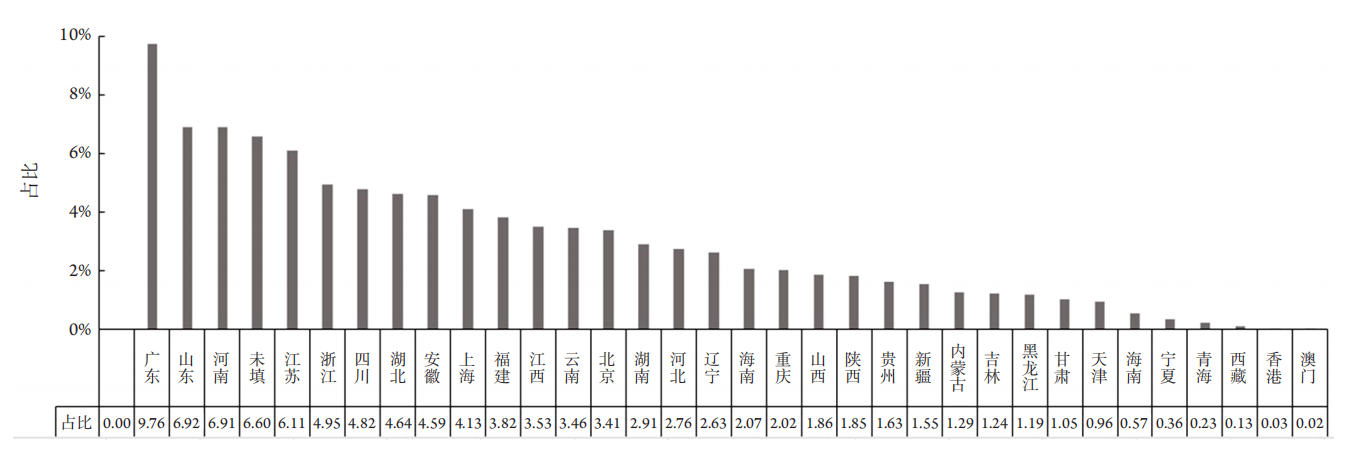
of their professions, titles, regions and other factors on the training effects was analyzed. Results: A total of
7 899 participants were enrolled in “Zhongshan Eye and Nose Related Diseases and Endoscopy Forums”, and the
total live broadcast person-time was 27 634. Associate senior doctors (30.2%, 2 382) and attending doctors (32.9%,
2 597) accounted for the largest proportion. The number of participants gradually increased from 269 in the first
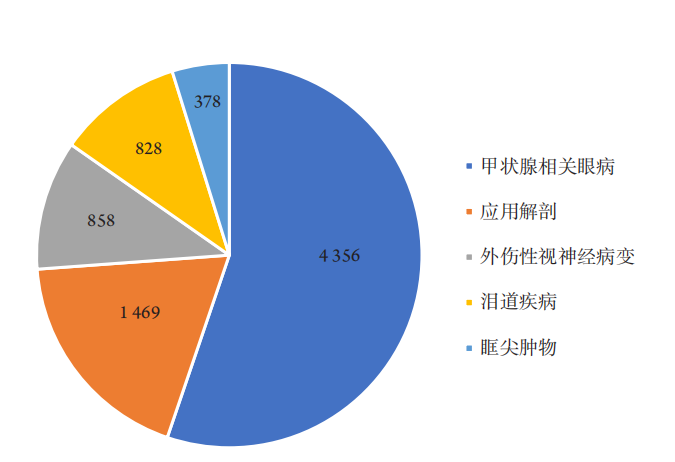
session to 2 537 in the 16th. The topics with the largest number of participants and the greatest gains were applied
anatomy and imaging, thyroid associated ophthalmopathy, and lacrimal duct diseases. Through the questionnaire
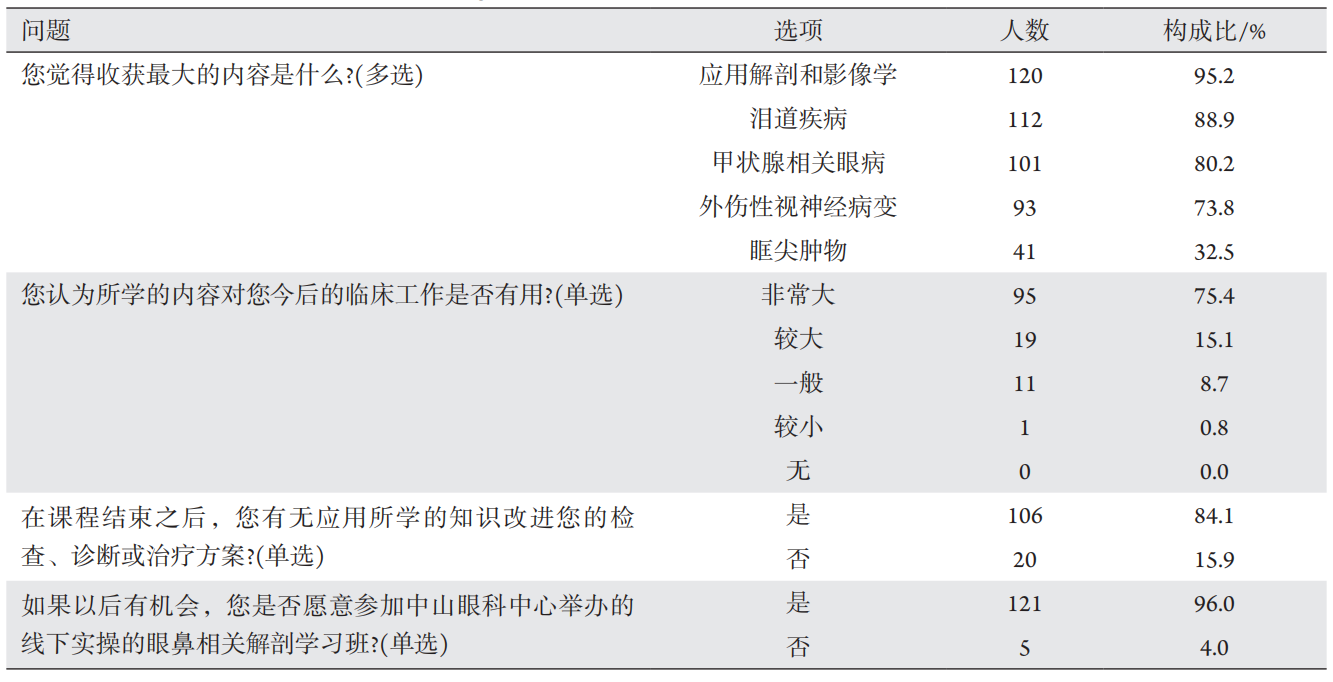
study, 75.4% (95/126) of the participants thought that what they had learned in the forums was very important
for their future clinical work; 84.1% (106/126) of the participants applied the knowledge to improve their daily
clinical work; 96.0% (121/126) of the participants were willing to participate in the offline practice of eye and nose
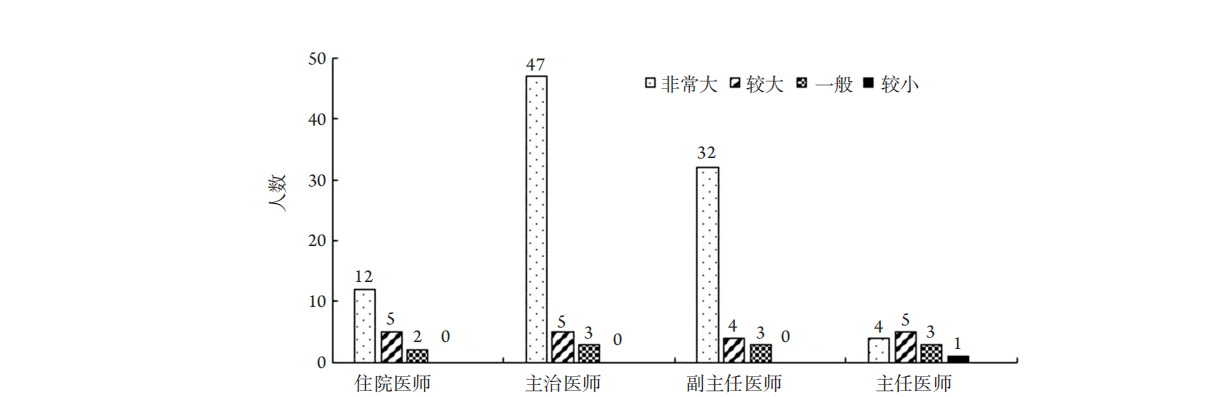
anatomy classes held by Zhongshan Ophthalmology Center. In terms of the role of the learned knowledge in the
future clinical work, the proportion of associate senior doctors and attending doctors who thought "very useful"
was significantly higher than that of senior doctors. In terms of whether to apply the knowledge learned to daily
clinical work, the proportion of associate senior doctors and attending doctors thinking “yes” was significantly
higher than that of senior doctors and residents. Participants who participated in 6–16 sessions had significantly
better training results than those who participated in 1–5 sessions. Conclusion: Eye and nose related diseases are
attracting increasing attention in ophthalmology and rhinology. “Zhongshan Eye and Nose Related Diseases and
Endoscopy Forums” are conducive to the expansion and improvement of participants’ theoretical knowledge,
and plays a good role in the daily clinical work of doctors with eye and nose related diseases. The training effect of
attending doctors and associate senior doctors is better, and the training effect of participants who participate in
the forum more times is better.
Figure 2 The number of participants in each theme of “Zhongshan Eye and Nose Related Diseases and Endoscopy Forums”
表1 学员对培训效果的评价
Table 1 Participants’ evaluation of the training effects of “Zhongshan Eye and Nose Related Diseases and Endoscopy Forums”
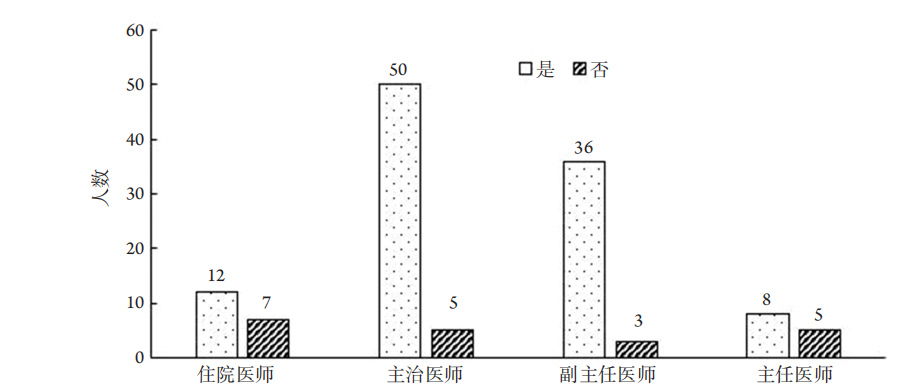
图3 不同职称的学员对“您认为所学的内容对您今后的临床工作是否有用”的答案
Figure 3 Answers of participants with different professional titles to the question “Do you think what you have learned in the forums will be useful for your future clinical work?”
图4 不同职称的学员对“在课程结束之后,您有无应用所学的知识改进您的检查、诊断或治疗方案”的答案
Figure 4 Answers of participants with different professional titles to the question “Have you applied what you have learned in the forums to improve your examination, diagnosis, or treatment?”
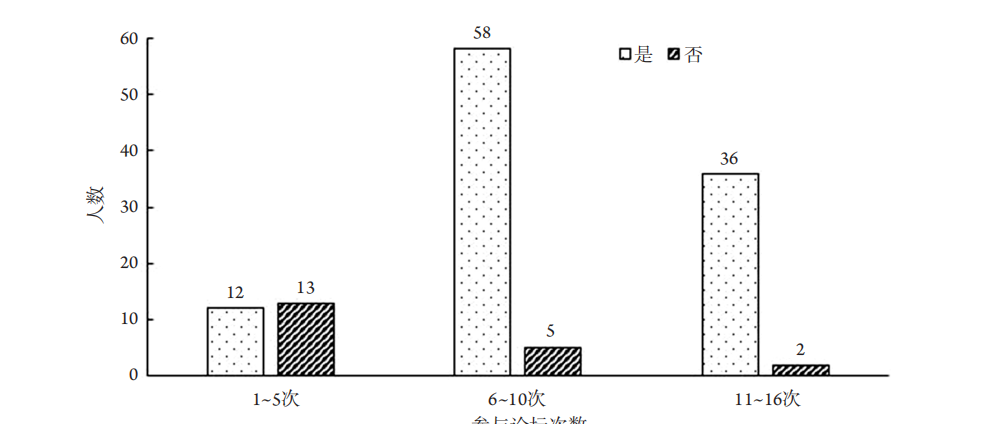
Figure 5 Answers of participants with different times of forums attended to the question “Have you applied what you have learned in the forums to improve your examination, diagnosis, or treatment?”
敖明昕, 洪晶, 孙岩秀, 等. 网络教学在八年制临床医学专业眼科学教学中的应用[ J]. 中华医学教育杂志, 2021, 41(5): 394-398
AO Mingxin, HONG Jing, SUN Yanxiu, et al. Practice and effect analysis of online course for ophthalmology teaching in eight-year program medical students[ J]. Chinese Journal of Medical Education, 2021, 41(5): 394-398.
宋跃帅, 谢静, 刘韵, 等. 颞骨解剖培训中分层次教学的必要性[J].中华耳科学杂志, 2020, 18(2): 424-427
SONG Yueshuai, XIE Jing, LIU Yun, et al. The importance of targeted teaching in temporal bone dissection courses[ J]. Chinese Journal of Otology, 2020, 18(2): 424-427.
王宇, 鲁兆毅, 马芙蓉, 等. 颞骨解剖学习班培训效果调查[ J]. 中华耳科学杂志, 2021, 19(6): 1019-1022
WANG Yu, LU Zhaoyi, MA Furong, et al. A survey on effects of temporal bone dissection courses[ J]. Chinese Journal of Otology, 2021, 19(6): 1019-1022
于泳, 谢姗姗, 卢佳琳, 等. “互联网+教育”背景下眼科住培医学教育发展规划研究[J]. 中国继续医学教育, 2021, 14(7): 172-176.
YU Yong, XIE Shanshan, LU Jialin, et al. Research on development planning of ophthalmology residential training medical education under the background of "Internet + Education"[ J]. China Continuing Medical Education, 2021, 14(7): 172-176.
刘国丹, 李昕格, 孙蕾, 等. 线上教学管理模式在医学院校眼科硕士研究生及住培生教育中的实践及满意度调查[ J]. 眼科, 2021,30(6): 470-4733
LIU Guodan, LI Xinge, SUN Lei, et al. Practice and satisfaction survey of online teaching management mode in ophthalmology postgraduate and residential education[J]. Ophthalmology in China, 2021, 30(6): 470-4733.
姬新珂, 冯莉莉, 申艳光, 等. 腾讯会议和钉钉在医学影像学线上教学中的应用研究[ J]. 卫生职业教育, 2021, 39(22): 67-392
JI Xinke, FENG Lili, SHEN Yanguang, et al. Application of Tencent conference and Dingding in online teaching of medical imaging[ J]. Health Vocational Education, 2021, 39(22): 67-392.
Cao JM, Wang N, Hou SY, et al. Epigenetics effect on pathogenesis of thyroid-associated ophthalmopathy[ J]. Int J Ophthalmol, 2021, 14(9): 1441-1448.
Ashraf DC, Jankovic I, El-Nachef N, et al. New-onset of inflammatory bowel disease in a patient treated with teprotumumab for thyroid associated ophthalmopathy[ J]. Ophthalmic Plast Reconstr Surg, 2021, 37(5): e160-e164.
Antonelli A, Ferrari SM, Fallahi P. Slit2 regulation of hyaluronan and cytokine synthesis in fibrocytes in thyroid-associated ophthalmopathy[J]. J Clin Endocrinol Metab, 2021, 106(4): e1907-e1908.
朱雁铃, 麦勇健, 叶慧菁, 等. 非甾体类抗炎药联合泪阜入路球周阻滞用于甲状腺相关性眼病眼眶减压术后镇痛效果和安全性评价[ J]. 中华医学杂志, 2022, 102(21): 1579-1583.
ZHU Yanling, MAI Yongjian, YE Huijing, et al. The analgesic efficacy and safety of non-steroidal anti-inflammatory drugs combined with medial canthus peribulbar block for postoperative pain in patients with thyroid-associated ophthalmopathy after orbital decompression[ J]. National Medical Journal of China, 2022, 102(21): 1579-1583.
Du B, Wang Y, Yang M, et al. Clinical features and clinical course of thyroid-associated ophthalmopathy: a case series of 3620 Chinese cases[ J]. Eye (Lond), 2021, 35(8): 2294-2301.
Ding Y, Yang S, Gao H. Teprotumumab: The dawn of therapies in moderate-to-severe thyroid-associated ophthalmopathy[ J]. Horm Metab Res, 2021, 53(4): 211-218.
Hu H, Chen HH, Chen W, et al. Thyroid-associated ophthalmopathy: preliminary study using T2 mapping to characterize intraorbital optic nerve changes before dysthyroid optic neuropathy[ J]. Endocr Pract, 2021, 27(3): 191-197.
Neag EJ, Smith TJ. 2021 update on thyroid-associated ophthalmopathy[ J]. J Endocrinol Invest, 2022, 45(2): 235-259.
Gao Y, Li W. Mechanisms of immune-related differentially expressed genes in thyroid-associated ophthalmopathy based on the GEO database[ J]. Ann Transl Med, 2022, 10(17): 926.
Fernando R, Smith TJ. Teprotumumab divergently alters fibrocyte gene expression: implications for thyroid-associated ophthalmopathy[ J]. J Clin Endocrinol Metab, 2022, 107(10): e4037-e4047.
Diao J, Chen X, Mou P, et al. Potential therapeutic activity of berberine in thyroid-associated ophthalmopathy: Inhibitory effects on tissue remodeling in orbital fibroblasts[J]. Invest Ophthalmol Vis Sci, 2022, 63(10): 6.
Ma H, Gao Y, Li JM, et al. Analysis of retinal vasculature changes in indirect traumatic optic neuropathy using optic coherence tomography angiography[ J]. Int J Ophthalmol, 2022, 15(8): 1344-1351.
Gao Y, Li J, Ma H, et al. The retinal vasculature pathophysiological changes in vision recovery after treatment for indirect traumatic optic neuropathy patients[ J]. Graefes Arch Clin Exp Ophthalmol, 2021, 259(10): 3093-3105.
Tu Y, Wu S, Pan Z, et al. Endoscopic transconjunctival deep lateral wall decompression for thyroid-associated orbitopathy: a minimally invasive alternative: transconjunctival endoscopic with wall decompression for TAO[ J]. Am J Ophthalmol, 2022, 235: 71-79.
Gao Y, Li J, Ma H, et al. Endoscopic trans-ethmosphenoid optic canal decompression is an optimal choice to save vision for indirect traumatic optic neuropathy[ J]. Acta Ophthalmol, 2022, 100(2): e491-e501.