HIGHLIGHTS
· This study identified distinct epidemiological characteristics of pterygium in Fengqing, featuring a pronounced female predominance (female-to-male ratio of 6.67:1, P<0.001), a concentration of the majority of patients in the 46–55 age group (36.71%), and a relatively low recurrence rate (1.71%).
· Data of inpatients with pterygium in 2023 were retrieved from medical records via the hospital information system. Statistical analyses included the chi-square test and multivariate logistic regression.
· Fengqing County is a key area for Sun Yat-sen University's poverty alleviation initiatives. This study presents epidemiological findings on pterygium—a high-prevalence ocular disorder—thereby providing evidence-based insights for formulating targeted medical assistance strategies in ethnic minority regions.
Pterygium is a common ocular surface disorder that has both cosmetic and functional consequences. If left untreated, it can result in progressive visual impairment. Epidemiological studies have demonstrated significant geographical variation in its prevalence, with notably higher rates observed in high-altitude regions (ranging from12.3% to 39.0%) compared to low-altitude areas (ranging from 4.43% to 9.4%) [1-9].
Yunnan Province is located in the southwestern plateau region of China, with an average altitude of over 2000 meters. Epidemiological data show that the prevalence of pterygium among middle-aged and elderly populations in this area can be as high as 35.2% to 39% [3,4]. Fengqing County, situated in the southwest of Yunnan and near China’s border, is home to 23 ethnic groups, including Han, Yi, Bai, Miao, and other minorities [10]. Since 2013, Sun Yat-sen University has been designated as the main institution responsible for targeted medical poverty alleviation in Fengqing County. Understanding the epidemiology of high-prevalence ocular disorders such as pterygium is crucial for improving the effectiveness of medical assistance programs in ethnic minority areas. The present study aims to investigate the epidemiological and clinical characteristics of pterygium, thus providing evidence-based insights for the formulation of targeted medical assistance strategies.
METHOD
General information
This study conducted a retrospective analysis of the hospitalized patients in the Ophthalmology department of The People's Hospital of Fengqing during the period from January to December 2023. The inclusion criteria were as follows: (1) patients whose primary diagnosis was pterygium and for whom the main purpose of hospitalization was pterygium excision; (2) patients with the proliferated pterygium tissue encroaching upon the limbus and presenting with significant ocular symptoms; (3) patients with complete epidemiological and clinical data. Meanwhile, patients with malignant tumors, as well as those suffering from severe heart, liver, lung, kidney diseases and autoimmune disorders, were excluded from the study.
Diagnostic Criteria and Surgical Indications
Pterygium is defined as the abnormal proliferation of conjunctival tissue within the palpebral fissure, which progressive encroaches across the limbus onto the corneal surface. This fibrovascular proliferation typically takes on a triangular shape, with its apex directed toward the cornea. The severity of pterygium was classified using a five-grade system [11]: Grade 0: No conjunctival tissue proliferation in the palpebral fissure; Grade 1: The pterygium head reaches the limbus and minimally disrupts the corneal marginal arc (Vogt's palisade); Grade 2: The pterygium head invades the area between the limbus and the pupillary margin; Grade 3: The pterygium head encroaches upon the pupillary region; Grade 4: The pterygium head extends beyond the pupil to the contralateral corneal margin. Surgical intervention was indicated for grades 1–4. Analysis was conducted using photographs captured by an anterior segment photography system (Chongqing Kanghua Ruiming SLM-7E).
Statistics
Statistical analysis was conducted using SPSS Statistics 26.0 software. Categorical data were presented as percentages (%). Intergroup comparisons were assessed using the chi-square (χ²) test. Spearman correlation analysis was used to examine the correlations among grading data. A multivariate logistic stepwise regression analysis was carried out to investigate the influencing factors of pterygium onset. A significance level of P< 0.05 was set to determine statistical significance.
RESULTS
General
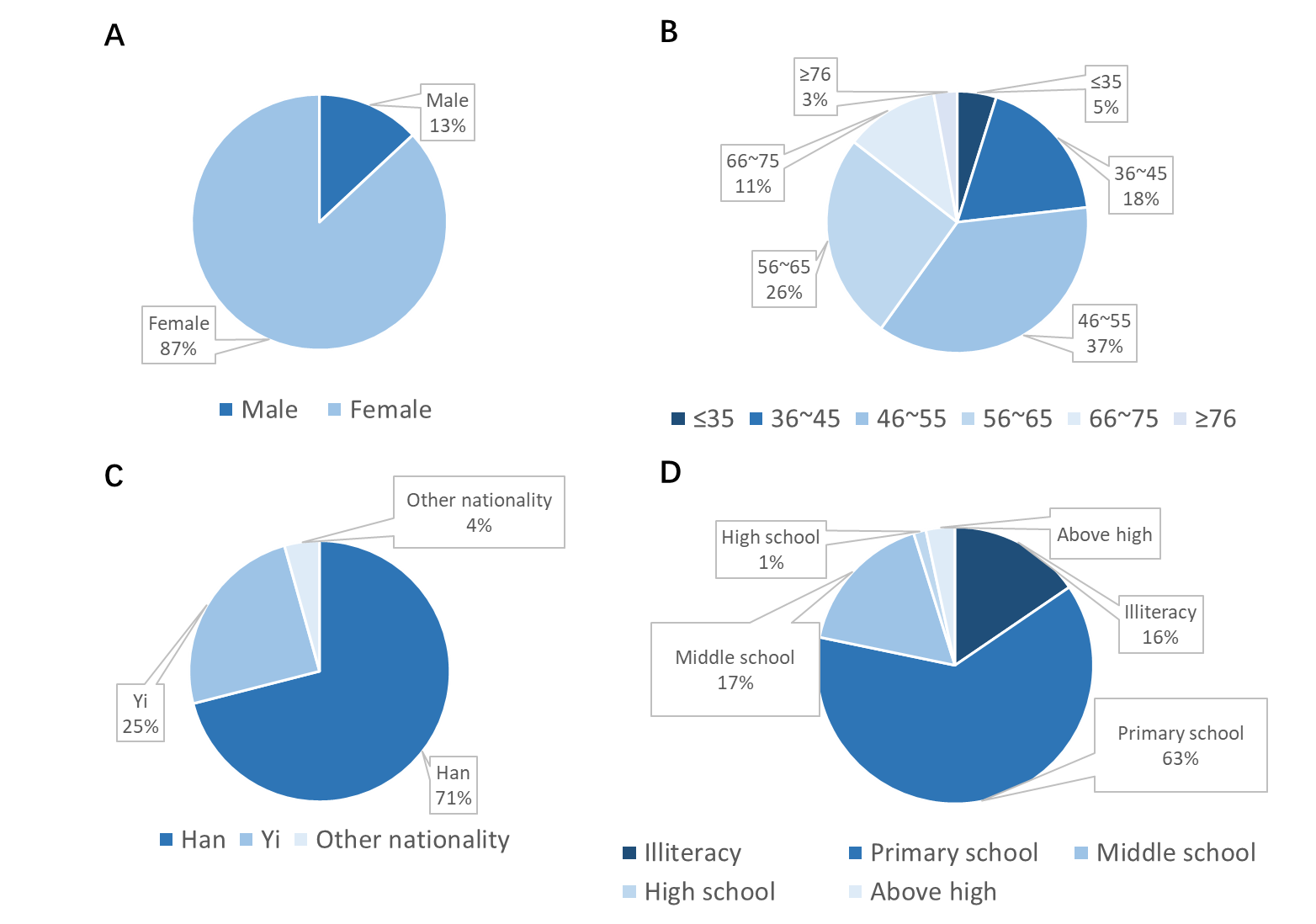
In 2023, the Ophthalmology department recorded a total of 1,413 hospitalized patients. Among them, 234 individuals were diagnosed with pterygium and underwent pterygium excision surgeries, accounting for 16.56% of the overall patient population. After excluding patients with repeated admissions, the revised total number of patiens was 1137. Among these, 207 patients had pterygium as their primary diagnosis, representing 18.21% of the total. The distribution of demographic characteristics and educational attainment levels is illustrated in Figure 1, and the corresponding numerical data are detailed in Table 1.
Figure 1 Demographic characteristics of pterygium surgery patients in 2023
(A) Gender distribution, (B) Age group stratification, (C) Ethnic composition, and (D) Educational attainment levels
Table 1 Demographic and educational level distributions of hospitalized patients in Ophthalmology department of the people's hospital of Fengqing in 2023
|
|
|
All inpatients
|
|
Patients with pterygium
|
|
|
|
Number
|
Proportion
|
|
Number
|
Proportion
|
|
Gender
|
Male
|
482
|
42.39%
|
|
27
|
13.24%
|
|
Female
|
655
|
57.61%
|
|
180
|
86.76%
|
|
Total
|
1137
|
100%
|
|
207
|
100%
|
|
Age
|
≤35
|
84
|
7.39%
|
|
10
|
4.83%
|
|
36~45
|
84
|
7.39%
|
|
38
|
18.36%
|
|
46~55
|
204
|
17.94%
|
|
76
|
36.71%
|
|
56~65
|
301
|
26.47%
|
|
53
|
25.60%
|
|
66~75
|
322
|
28.32%
|
|
24
|
11.59%
|
|
≥76
|
142
|
12.49%
|
|
6
|
2.91%
|
|
Total
|
1137
|
100%
|
|
207
|
100%
|
|
Education level
|
Illiterate
|
331
|
29.11%
|
|
32
|
15.46%
|
|
Primary school
|
573
|
50.40%
|
|
130
|
62.80%
|
|
Secondary school
|
151
|
13.28%
|
|
35
|
16.91%
|
|
High school and above
|
82
|
4.40%
|
|
10
|
1.45%
|
|
Total
|
1137
|
100%
|
|
207
|
100%
|
|
Ethnical groups
|
Han
|
840
|
73.87%
|
|
147
|
72.06%
|
|
Yi
|
255
|
22.43%
|
|
51
|
24.02%
|
|
Other ethnic minorities
|
42
|
3.52%
|
|
9
|
4.35%
|
|
Total
|
1137
|
100%
|
|
207
|
100%
|
Epidemiological characteristics of pterygium
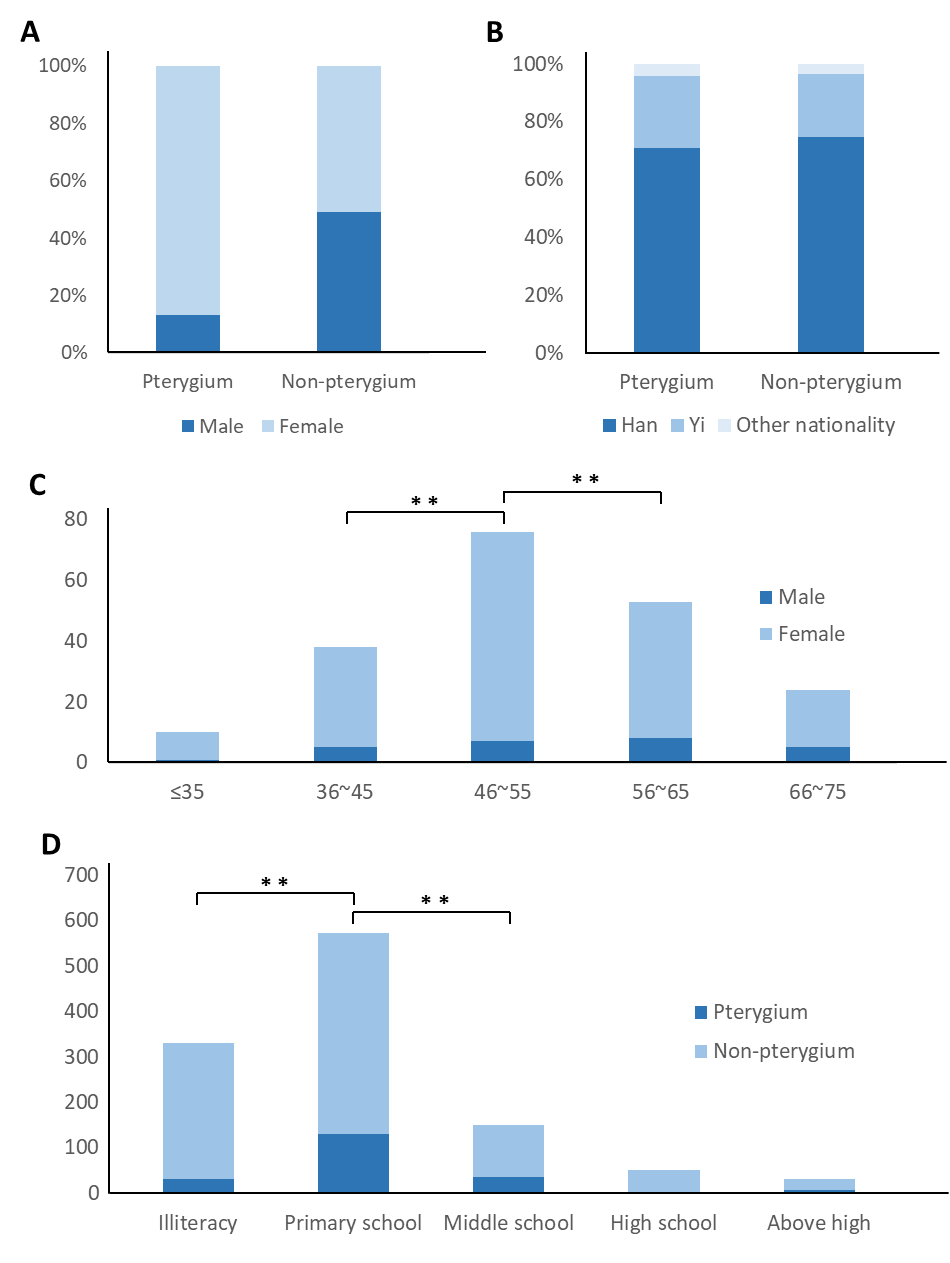
The analysis revealed significant gender-based differences in pterygium prevalence. Female patients had substantially higher prevalence rates compared to males patients (
P< 0.001, χ² = 89.261). However, no statistically significant ethnic variations were observed among different groups (
P= 0.57, χ² = 1.125). Age distribution analysis identified a predominant cluster within the 46-55-year age group, which had a significantly larger number of patiens compared to both younger (<45 years) and older (>56 years) age groups (
P < 0.001, χ² = 31.732). Regarding educational attainment patterns, 63% of patients had received primary school education, representing a statistically significant majority compared to other education levels (
P< 0.001, χ² = 64.467). Complete statistical distributions are presented in Figure 2.
Figure 2 Statistical analysis of pterygium prevalence in different gender, ethnic groups, age and educational attainment levels in pterygium patients in 2023
(A) Female patients demonstrated substantially higher rates than male patients (p < 0.001, χ² = 89.261); (B) No statistically significant ethnic variations were observed across different groups (p = 0.57, χ² = 1.125); (C) In pterygium patients, cases in the 46-55 year cohort showed a substantially larger number than other age groups (p < 0.001, χ² = 31.732); (D) For the educational attainment level analysis, 63% of the pterygium patients had primary school education, representing a statistically significant majority compared to other education levels (p < 0.001, χ² = 64.467)
Clinical characteristics of pterygium
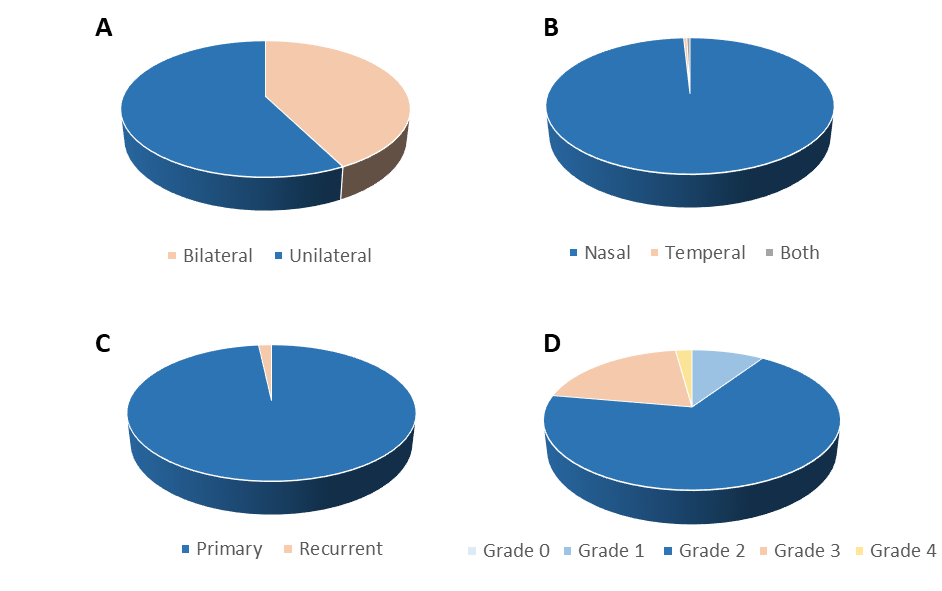
Among the 207 patients, 88 cases (42.51%) presented with bilateral pterygium, while 119 cases (57.49%) had unilateral involvement. Analysis of 234 affected eyes revealed that the fibrovascular proliferation was predominantly located nasally (232 eyes, 99.15%), with rare occurrences in the temporal region (1 eye, 0.43%) and bilaterally (1 eye, 0.43%). Primary pterygium accounted for the majority of cases (228 eyes, 97.44%), with only 4 eyes (1.71%) showing recurrence. Using the standardized 0-4 Grading system described in the Methods section, the severity distribution among the 234 eyes was as follows: Grade 0, 0 cases; Grade 1, 22 eyes (9.40%); Grade 2, 160 eyes (68.38%); Grade 3, 47 eyes (20.09%); Grade 4, 5 eyes (2.14%) (Figure 3). Notably, female patients exhibited significantly higher pterygium severity compared to male patients (
P = 0.032, χ² = 8.777). In this study,no significant correlation was found between age and the severity of pterygium (
R = 0.113,
P= 0.084).
Figure 3 Clinical characteristics of pterygium in pterygium patients during 2023
laterality (unilateral or bilateral) (A), anatomical location (B), disease status (primary or recurrent) (C), and severity grading (D)
Analysis of risk factors associated with the development of pterygium
In the Fengqing region, hypertension, diabetes mellitus, meibomian gland dysfunction, age-related cataract, and ametropia are highly prevalent. We conducted a comprehensive analysis to explore the associations between these ocular and systemic diseases and pterygium. The findings revealed that meibomian gland dysfunction (P < 0.001, χ² = 312.9), age-related cataract (P< 0.001, χ² = 72.842), hypertension (P < 0.001, χ² = 29.792), and diabetes mellitus (P< 0.001, χ² = 14.859) were significantly correlated with the occurrence of pterygium. In contrast, ametropia demonstrated no such significant relationship (P = 0.507, χ² = 0.440).
Based on the results of the aforementioned univariate analysis, variables including age, gender, ethnicity, educational level, and systemic and ocular diseases were assigned values, and a multivariate logistic regression analysis was subsequently conducted. The analysis revealed that female gender, age, diabetes mellitus, age-related cataract and meibomian gland dysfunction were identified as independent risk factors for pterygium development in this region (
P< 0.05) (Table 2).
Table 2 Multivariate logistic regression analysis of factors influencing pterygium development
|
Factors
|
B
|
SE
|
Waldχ²
|
P value
|
OR value
|
95% CI
|
|
Gender
|
1.935
|
0.249
|
60.300
|
0.000
|
6.922
|
(4.248, 11.280)
|
|
Age
|
-0.735
|
0.259
|
8.055
|
0.005
|
0.480
|
(0.289, 0.797)
|
|
Ethnical groups
|
0.147
|
0.224
|
0.429
|
0.512
|
1.158
|
(0.746, 1.797)
|
|
Educational attainment levels
|
0.295
|
0.245
|
1.451
|
0.228
|
1.343
|
(0.831, 2.172)
|
|
Hypertension
|
0.127
|
0.250
|
0.259
|
0.611
|
1.136
|
(0.696, 1.854)
|
|
Diabetes mellitus
|
1.473
|
0.484
|
9.284
|
0.002
|
4.364
|
(1.691, 11.258)
|
|
Age-related cataract
|
1.111
|
0.273
|
16.599
|
0.000
|
3.306
|
(1.779, 5.180)
|
|
Meibomian gland dysfunction
|
2.730
|
0.216
|
159.789
|
0.000
|
15.338
|
(10.044, 23.422)
|
DISCUSSION
In this study, we retrospectively analyzed demographic and clinical characteristics of hospitalized pterygium patients in 2023. Findings showed distinct epidemiological patterns in Fengqing, including gender distribution, age-specific prevalence, and recurrence rates. We explored underlying causes of these results, aiming to provide epidemiological insights for targeted public health and poverty alleviation strategies.
Significantly higher prevalence of pterygium among females than males
A notable epidemiological feature emerging from this study is the significantly higher prevalence of pterygium among females compared to males, with a ratio of 6.67:1 ratio. This stands in stark contrast to the regional sex ratio of 105.31 males per 100 females [12]. This disparity might be attributed to women's higher exposure to ultraviolet (UV) radiation, as they are more frequently engaged in outdoor agricultural activities [13].
Fengqing is an agricultural county and its economy heavily depends on tea and walnut cultivation [14]. The labor-intensive nature of tea and walnut production demands specific physical attributes such as optimal height, endurance, and manual dexterity - qualities that predominantly suit female workers. Women are reported to outnumber men by a factor of 2-5 times in essential farming activities such as weeding, fertilizing, irrigation, and harvesting [13]. Moreover, a significant number of male labor have migrated from mountainous areas, leading women to take on increasingly critical roles in maintaining agricultural and forestry operations [13]. These factors likely contribute to women's prolonged exposure to UV radiation, which in turn may explain their higher prevalence of pterygium.
Hospitalized pterygium patients concentrating in the 46-55 age group
Another notable epidemiological pattern identified in our study was the concentration of hospitalized pterygium patients within the 46-55 age group, account for 36.7% of cases. In contrast, there were significantly fewer cases among individuals aged over 65 years (14%). This finding deviated from the widely accepted notion that there is a positive correlation between the incidence of pterygium and increasing age [14]. Interestingly, the proportion of patients under 45 years old was relatively high at 23.2%, which was higher compared to other regions in China [1, 15, 16].
In fact, during previous rural eye health screenings, we discovered a substantial number of undiagnosed pterygium cases among elderly populations. Despite experiencing symptoms, people with pterygium had barriers impeding their access to healthcare. Firstly, there are geographical constraints. Fengqing is mountainous terrain (94.7% of the area is mountainous), and has underdeveloped transportation infrastructure [17]. With predominantly rural mountain roads and limited number of secondary highways, travel to the county hospital from remote areas typically takes more than 2 hours. Secondly, there are physical limitations. Elderly patients often cannot withstand the physical demands of traveling through mountainous regions. Thirdly, there are socioeconomic barriers. Limited household income, the lack of family members to accompany them for medical visits, and inadequate rural pension security levels are also major factors that prevent elderly rural residents from seeking medical care outside their communities [18, 19]. These combined factors lead to significant disparities in healthcare access, particularly for elderly population in remote mountainous regions.
Recurrent pterygium cases being relatively uncommon among surgical patients
Our study documented a relatively low incidence of recurrent pterygium cases, leading us to hypothesize that this does not reflect the true recurrence rates in this region. Due to limited knowledge of available treatment options, coupled with financial constraints and geographical barriers, patients may hesitate to seek secondary medical consultations when the disease recurs [18, 19]. Fengqing is a multi-ethnic region where the Han culture coexists and interacts with ethnic minority cultures, as well as inland and frontier civilizations. The long-standing interplay between biology and culture has a profound influence on the health status, disease progression, and healthcare-seeking behaviors of the local population [20, 21]. Within this cultural context, a tripartite medical system has developed locally, comprising herbal medicine, shamanistic healing, and Western medicine [22]. After surgical recurrence, individuals may question the effectiveness of Western medicine and appeal for other forms of healthcare. For instance, they might seek treatment from a herbalist or purchase folk remedies for their ailments [19]. This complex interplay of cultural, economic, and healthcare system factors is likely responsible for the observed patterns of recurrent case presentation.
Ocular and systematic disorders associated with pterygium development
Hypertension, diabetes mellitus, meibomian gland dysfunction (MGD), and age-related cataract are among the predominant health issues in Fengqing County. Univariate analysis has revealed significant differences in the prevalence of these factors among patients with pterygium. The local predilection for high-sodium diets is a contributing factor to the notably high hypertension prevalence rate of 51.81% [23]. Moreover, the region’s distinctive geographical features, including its high altitude, intense ultraviolet radiation, and arid, windy weathe, predispose the inhabitants to a variety of ocular surface disorders, with MGD being particularly prevalent [24]. The multivariate regression analysis conducted in this study confirms that MGD is a significant risk factor for the development of pterygium. This finding further supports the high incidence and interconnection of ocular surface diseases in this area.
This study has certain limitation. It investigated disease prevalence using annual ophthalmic inpatient data, which provides some insights into disease characteristics. Nevertheless, potential selection biases may exist due to the hospital-based study design. Future research should conduct population-based, multiethnic epidemiological surveys that incorporate robust sampling methodologies to generate more accurate and generalizable findings.
Based on our findings, we propose the following evidence-based recommendations for medical poverty alleviation initiatives. Firstly, local medical institutions could develop culturally sensitive health education programs focusing on common eye diseases. Secondly, an intelligent "Three-tier Diagnosis and Treatment Platform" should be established through collaboration with Zhongshan Ophthalmic Center, Sun Yat-sen University [25]. Furthermore, county hospitals can set up ophthalmic expert workstations in rural areas as their subsidiaries and offer ophthalmic skills training. Lastly, with regard to medical insurance, it would be advisable to increase the reimbursement rate for common local diseases such as pterygium. This is of utmost importance for alleviating the financial burden on families caused by medical expenses and preventing the recurrence of poverty due to illness.
Correction notice
None
Acknowledgement
The authors extend their sincere gratitude to Mr. Xin Huang, First Secretary of Hongtang Village in Fengqing County and faculty member of Sun Yat-sen University, for his invaluable insights regarding the socioeconomic and health status of rural populations in Fengqing. It is worth noting that Mr. Huang is also a teacher dispatched by Sun Yat-sen University to participate in the poverty alleviation project.
Author Contributions
(Ⅰ) Conception and design: Yun Xie, Chunxiao Wang
(Ⅱ) Administrative support: Chunguang Li, Yimin Zhong, Chunxiao Wang
(Ⅲ) Provision of study materials or patients: Yun Xie, Wending Li, Hongyang Zhao, Guifei Zhang, Liqin Hong
(Ⅳ) Collection and assembly of data: Yun Xie, Wending Li, Hongyang Zhao, Guifei Zhang, Liqin Hong
(Ⅴ) Data analysis and interpretation: Yimin Zhong, Chunxiao Wang
(Ⅵ) Manuscript writing: All authors
(Ⅶ) Final approval of manuscript: All authors
Conflict of Interests
None of the authors has any conflicts of interest to disclose.All authors have declared in the completed the ICMJE uniform disclosure form.
Patient consent for publication
Not applicable.
Ethical Statement
This retrospective study was conducted in accordance with the principles of the Declaration of Helsinki. The study was approved by the Institutional Review Board of the People's Hospital of Fengqing. The requirement for written informed consent was waived by the Institutional Review Board due to the retrospective nature of the study and the use of anonymized data.
Provenance and Peer Review
This article was a standard submission to our journal. The article has undergone peer review with our anonymous review system.
Data Sharing Statement
None
Open Access Statement
This is an Open Access article distributed in accordance with the Creative Commons AttributionNonCommercial-NoDerivs 4.0 International License (CC BY-NC-ND 4.0), which permits the non-commercial replication and distribution of the article with the strict proviso that no changes or edits are made and the original work is properly cited (including links to both the formal publication through the relevant DOI and the license).