





HIGHLIGHTS
1. Critical Discoveries and Outcomes
• Preoperative laboratory testing is widely debated, with guidelines in high-income countries generally recommending against routine testing for ambulatory surgery. However, evidence from low- and middle-income countries like China is sparse, despite the widespread practice of screening for blood-borne pathogens (HBV, HCV, HIV, and syphilis) before elective surgery in these settings.
2. Methodological Innovations
• This study provides the first comprehensive cost-effectiveness analysis of preoperative screening for four major blood-borne pathogens in China. Using dynamic Markov models, we found that screening for HBV, HIV, and syphilis in all adults aged 18-70 years is cost-effective. Uniquely, we demonstrate that HCV screening can be restricted to individuals aged 40-70 years without compromising treatment rates or mortality outcomes, offering a more resource-efficient strategy.
3. Prospective Applications and Future Directions
• These findings provide crucial evidence to inform clinical guidelines and health policy in China and similar settings. The results support the continuation of current screening practices for HBV, HIV, and syphilis, while suggesting a potential policy refinement for HCV screening that could optimize resource allocation. This study also highlights the necessity for context-specific economic evaluations in low- and middle-income countries rather than directly applying recommendations from high-income nations.
Introduction
Preoperative laboratory testing provides a unique opportunity to identify asymptomatic abnormalities missed by routine clinical evaluation, but whether such screening should be conducted routinely remains controversial.[1] Numerous studies have shown that routine preoperative testing neither decreases the risk of adverse events nor improves patient outcome, yet is costly and could lead to overdiagnosis.[1-2] Furthermore, many physicians consider preoperative tests unnecessary but order them regardless, driven by institutional requirements or medico-legal concerns.[1] Since 2002, guidelines from multiple specialty societies have recommended against routine preoperative laboratory testing.[3-4] The preoperative requirement for a “complete history and physical” has also been eliminated in many ambulatory surgery centers.[5] However, these guidelines and their underlying evidence originate primarily from high-income countries (HICs). Evidence from low and middle-income countries (LMICs), including China, despite wide-spread use of preoperative testing in many of these settings.
In China, testing for four blood-borne pathogens is routinely performed before elective surgery in China, including hepatitis B virus (HBV), hepatitis C virus (HCV), human immunodeficiency virus (HIV) and syphilis. These pathogens are recognized as major global public health threats, responsible for a substantial disease burden.[6] Worldwide, an estimated 325 million people are chronic carriers of HBV or HCV, 38 million live with HIV, and there are 18 million prevalent cases of syphilis, with nearly 6 million new infections occurring annually.[7-8] The epidemiology of these pathogens varies across populations, generally characterized by higher prevalence and lower diagnosis’ rates in developing countries.[9] As the world’s populous country, China has an estimated 87 million HBV and 7.6 million HCV carriers, fewer than 25% of whom have been diagnosed.[10] Meanwhile, the HIV and syphilis epidemics continue to pose significant public health challenges both globally and domestically.
The extent to which preoperative screening benefits patients in LMICs remains unclear. On the one hand, the prevalence of these infections among general surgical candidates is likely to be low;[4] On the other hand, preoperative screening may present a unique opportunity for early detection and timely treatment. Given the current high volume and projected substantial increases in elective surgeries in China, evaluating the cost-effectiveness of preoperative screening practices is critical for informing health policy.
To fill this evidence gap, we conducted comprehensive, dynamic Markov models that incorporate transitions between various disease states across the life-course. This approach aimed to provide robust estimates of the cost-effectiveness of routine preoperative screening for each of these four pathogens before elective surgery in China.
Methods
Model structure
TreeAge Pro 2023 software (TreeAge; Williamstown, MA, USA) was used to construct combined decision tree and Markov models. These models simulated the natural history, along with associated costs and effectiveness of multiple preoperative screening strategies compared with no screening for each of the four blood-borne pathogens (HBV, HCV, HIV and syphilis) among patients before elective surgery in China (appendix, Figure S1 to Figure S4). The reporting of methods and results conforms to the Consolidated Health Economic Evaluation Reporting Standards checklist (appendix).[11]
A hypothetical cohort of 100,000 individuals aged 18-70 years was followed from age 18 until age 100 or death, whichever came first. The initial age structure of the cohort mirrored the age distribution of the Chinese population in 2020. Individuals were entered the model as either healthy or with varying infection statuses and could transition to death from background mortality from any health state. We defined ten mutually exclusive health states to represent the natural history of chronic HBV infection, nine for HCV, fourteen for HIV, and ten for syphilis (Appendix). In the absence of screening, we assumed that individuals would only be diagnosed upon the onset of clinical symptoms. All health state transitions were modeled using a 1-year cycle length. Model inputs were derived from published literature and data. China-specific data were prioritized; when unavailable, estimates from other Asian populations or international literature were used (Table 1). PubMed, Medline, Embase, Scopus and CNKI were searched from inception to May 12, 2023, for English- and Chinese-language studies relevant to the Chinese population. Search terms included “HBV”, “HCV”, “hepatitis B”, “hepatitis C”, “HIV”, “AIDS”, “treponema pallidum”, “syphilis”, “natural course”, “epidemiology”, “transition”, “progression” and “mortality” (Appendix). Transition rates between health states were assumed to differ based on treatment status (treated vs. untreated).
|
Domain |
Base-case values or assumptions |
Source/location |
|
Population and strategies |
100,000 adults aged 18-70 years; one-time screening; 15 age-targeted strategies compared with all-age screening |
Methods; Appendix |
|
Prevalence/incidence inputs |
Age-stratified infection-status and incidence inputs for HBV, HCV, HIV, and syphilis |
Appendix Tables S1, S7,S11-S12, S16-S17 |
|
Screening costs |
HBV $2.76; HCV $2.76; HIV $25.40; syphilis $8.27 per person screened |
Hospital cost data; Appendix |
|
Confirmatory testing costs |
HBV $478; HCV $463; HIV $773; syphilis $20.68 per positive screen |
Published literature |
|
Screening performance |
HBV sensitivity/specificity 0.932/0.931; HCV 0.973/0.989; HIV 0.9521/0.9995; syphilis sensitivity 0.93-1.00 by stage |
Appendix |
|
Utility values |
Hepatitis 0.380-1.000; HIV 0.730-0.940; syphilis 0.760-1.000 |
Published literature; Appendix |
|
Economic assumptions |
3.0% annual discount rate; WTA threshold $100,000 per QALY lost; threshold uncertainty assessed using acceptability curves |
Methods; Figure 2 |
Data on disease prevalence and incidence, the probability of developing symptoms at each stage, and the probability of seeking treatment following a positive screening result were derived from the published literature. Mortality rates across different health states were assumed to be age-dependent. Age-stratified background mortality data were obtained from the National Bureau of Statistics of China (2010)[12] and published studies (Appendix).
Although preoperative testing may be performed multiple times over an individual’s lifetime, we simulated universal preoperative screening as a single lifetime event to estimate the population-level value of detecting previously undiagnosed infections. Fifteen target screening age groups were modeled, including those aged 18-30 years, 18-40 years, 18-50 years, 18-60 years, 18-70 years, 30-40 years, 30-50 years, 30-60 years, 30-70 years, 40-50 years, 40-60 years, 40-70 years, 50-60 years, 50-70 years, and 60-70 years. Screening was assumed to occur in the first year of cohort entry. The screening algorithms comprised a rapid HBsAg test for HBV, an HCV antibody test for HCV infection, an HIV antibody test for HIV and a treponemal test for syphilis, all performed on peripheral blood samples. Individuals with a positive initial screening test underwent confirmatory testing. The sensitivity and specificity of these screening methods were estimated based on published studies, with a preference for data derived from Chinese populations.
Costs
The model incorporated medical costs, including screening, confirmatory testing, vaccination, salvage therapy and disease-stage-specific treatments. The base-case preoperative screening costs for each pathogen were derived from the billing data of our hospital, the largest tertiary eye hospital in China. According to published literature, the additional per-person costs for confirmatory testing used in the models were $478 for HBV,[13] $463 for HCV,[13] $773 for HIV[14] and $20.68 for syphilis.[15] Similar to transition probabilities, the annual treatment costs for different stages of HBV, HCV, HIV and syphilis infections were derived from published studies (Appendix). All costs originally collected in Chinese yuan (RMB) were converted to US dollars (USD) using the 2023 exchange rate of 7.2551 RMB/USD. Reimbursement rates, institutional accounting costs, out-of-pocket patient expenses, transportation costs, and indirect productivity losses were not explicitly modeled.
Utilities and quality-adjusted life-years
Health state utility value, based on published studies, was used to calculate quality-adjusted life-years (QALYs). Utility values from Chinese or Asian populations were prioritized where available. Utility values ranged from 0.380 to 1.000 for different stages of hepatitis, from 0.730 to 0.940 for HIV, and from 0.760 to 1.000 for syphilis (Appendix).[13,15-16]
Measurement of cost-effectiveness
Both costs and health outcomes (QALYs) were discounted at an annual rate of 3.0% . Given that the cost-effectiveness was assessed over a lifetime horizon (from 18 to 100 years), a half-cycle correction was applied. The primary outcomes of the study were the decremental cost-effectiveness ratios (DCERs) for HBV, HCV, HIV and syphilis. The DCER was calculated as the difference in total cost between each less intensive screening strategy (e.g., a screening restricted to aged 18-30 years) and the status quo (universal screening), divided by the corresponding difference in total QALYs. Thus, the DCERs represents the cost saved per QALY lost. A strategy with a DCER above the willingness-to-accept (WTA) threshold was considered decrementally cost-effective. Based on previous decremental cost-effectiveness analysis (DCEA) literature, the WTA threshold was set at $100,000 per QALY lost.[17]
Sensitivity analysis
We performed one-way deterministic sensitivity analyses (OWSA) by varying individual parameters across plausible ranges to assess the robustness of our findings (Appendix). Tornado diagrams were generated to illustrate the ten parameters to which the DCERs were most sensitive. Probabilistic sensitivity analysis was performed using 10,000 Monte Carlo simulations, drawing values from the predefined probability distributions of all parameters simultaneously.
Results
Overall, screening strategies for other fourteen target screening age groups (18-30, 18-40, 18-50, 18-60, 18-70, 30-40, 30-50, 30-60, 30-70, 40-50, 40-60, 40-70, 50-60, 50-70, and 60-70 years) would save a cost of $116,132.93 to 6,270,568.30, associated with loss of 0.39-2,405.99 QALYs. Furthermore, the no-screening strategy yielded cost saving of $835,245.84 to 7,672,689.74, with a loss of 34.72 to 2,981.85 QALYs, 5 to 206 fewer treated infections, and an additional 3 to 155 disease-related deaths.
The decremental costs and QALYs for the 15 screening scenarios (15 target age groups) for each of the four blood-borne pathogens compared with the all-age screening strategy are shown in Table 2 and Figure 1. For HBV, HIV and syphilis, none of the age-restricted or no-screening strategies showed a DCER above the WTA of $100,000. Compared with preoperative screening for all individuals aged 18 to 70 years of age, no preoperative screening for HBV, HIV and syphilis saved $852.18, $13,430.25, and $24,033.22 per QALY lost, respectively. However, this approach also led to 206, 86, and 9 fewer infected individuals receiving treatment per 100,000 population for HBV, HIV and syphilis, respectively, along with an increase of 155, 16 and 3 disease-related deaths per 100,000 for each infection. Preoperative screening for HCV in individuals aged 30 to 70 years of age, and 40 to 70 years of age yielded a DCER of 449,031.61 and 114,915.94 per QALY lost, respectively. Notably, these screening strategies showed no impact on either the number of individuals receiving treatment or disease-related mortality, suggesting they are more decrementally cost-effective compared to the status quo.
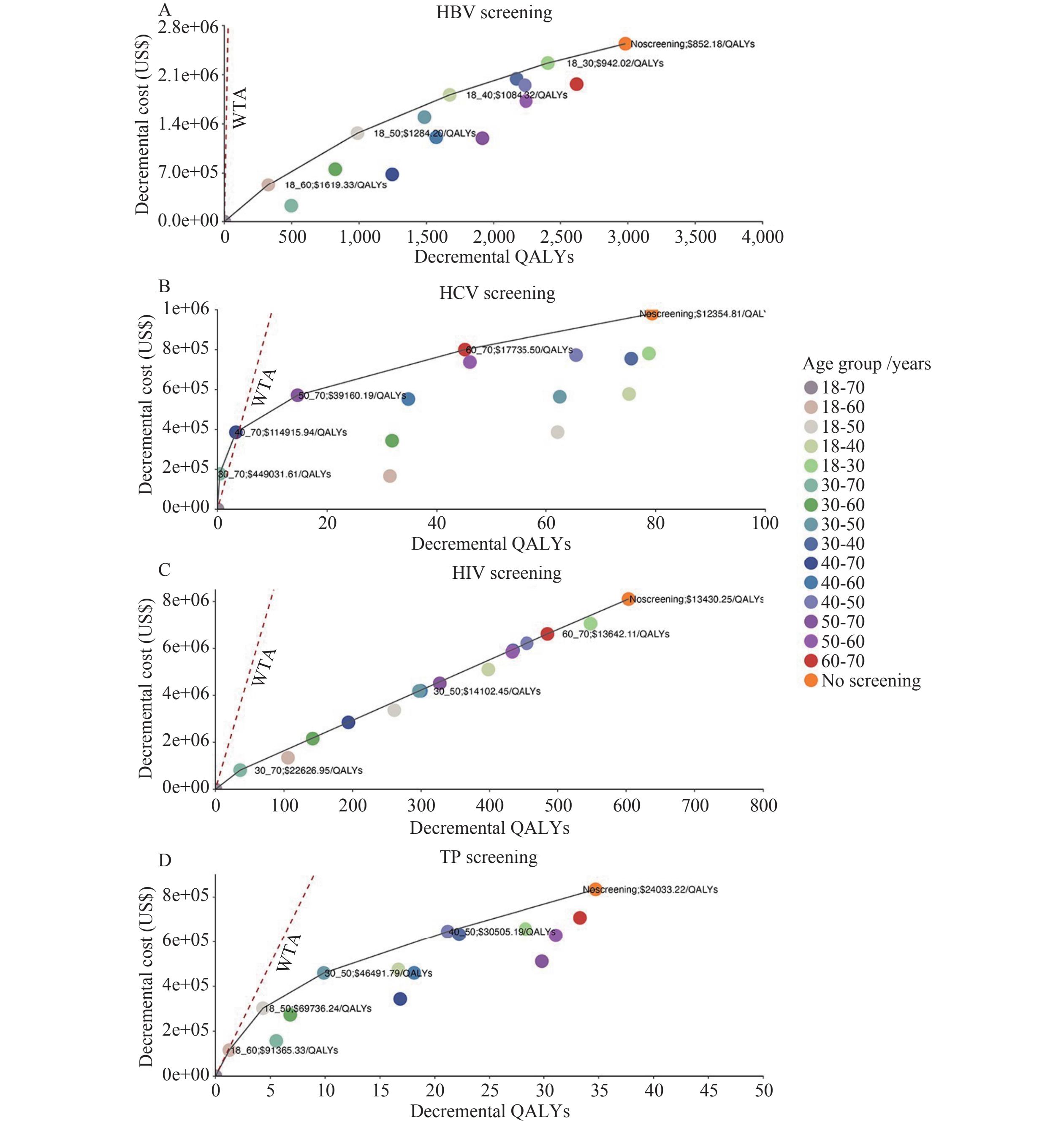
Decremental QALYs and decremental costs of intervention strategies in different age groups compared with the 18-70 screening intervention scenario. Strategies on the cost-effectiveness frontier dominate strategies above the frontier (solid line). HBV = Hepatitis B virus; HCV = Hepatitis C virus; HIV = Human immune deficiency virus; TP = Treponema pallidum; QALY = Quality-adjusted life-year; WTA = Willingness to accept (100,000 dollars per QALY lost).
|
Strategies |
Intervention effectiveness over the lifetime (per 100,000) |
Investment cost, US$ |
Cost-effectiveness |
||||||||||
|
Individuals living with infection |
Diagnosed cases |
Infected individuals with treatment |
Disease-related deaths |
Terminal stages |
QALY accumulated |
Cost for screening |
Cost for treatment |
Cost per death averted, US$ |
DCER cost/QALY lost |
||||
|
HBV screening |
|
|
|
|
CC |
DC |
HCC |
|
|
|
|
|
|
|
18-70 |
7,998 |
6,964 |
1,954 |
936 |
270 |
357 |
445 |
2,114,213.86 |
353,317.86 |
28,120,496.83 |
— |
— |
|
|
18-60 |
7,998 |
6,204 |
1,912 |
958 |
278 |
369 |
454 |
2,113,887.56 |
301,521.34 |
27,648,764.76 |
23,756.57 |
1,619.33 |
|
|
18-50 |
7,999 |
5,079 |
1,854 |
998 |
289 |
389 |
469 |
2,113,225.68 |
219,455.59 |
26,997,170.45 |
20,648.90 |
1,284.20 |
|
|
18-40 |
7,999 |
4,147 |
1,809 |
1,033 |
296 |
406 |
482 |
2,112,541.18 |
145,762.79 |
26,531,609.84 |
18,652.40 |
1,084.32 |
|
|
18-30 |
8,000 |
3,304 |
1,770 |
1,068 |
302 |
422 |
494 |
2,111,807.87 |
70,112.96 |
26,159,200.11 |
17,253.84 |
942.02 |
|
|
No screening |
8,001 |
2,769 |
1,748 |
1,091 |
307 |
432 |
503 |
2,111,232.01 |
0 |
25,957,676.35 |
16,460.09 |
852.18 |
|
|
HCV screening |
|
|
|
|
CC |
DC |
HCC |
|
|
|
|
|
|
|
18-70 |
798 |
1,448 |
802 |
144 |
164 |
110 |
151 |
2,126,687.28 |
942,577.74 |
22,257,999.53 |
— |
— |
|
|
30-70 |
798 |
1,407 |
802 |
144 |
164 |
110 |
151 |
2,126,686.89 |
764,996.93 |
22,258,241.39 |
12,487,727.45 |
449,031.61 |
|
|
40-70 |
798 |
1,351 |
802 |
144 |
164 |
110 |
151 |
2,126,683.93 |
554,980.80 |
22,259,740.87 |
3,044,796.45 |
114,915.94 |
|
|
50-70 |
799 |
1,290 |
802 |
145 |
164 |
110 |
152 |
2,126,672.70 |
366,784.24 |
22,263,003.73 |
979,398.30 |
39,160.19 |
|
|
60-70 |
800 |
1,194 |
800 |
146 |
164 |
111 |
153 |
2,126,642.17 |
144,397.64 |
22,258,001.17 |
410,766.94 |
17,735.50 |
|
|
No screening |
804 |
1,114 |
797 |
148 |
165 |
112 |
154 |
2,126,607.92 |
0 |
22,224,183.87 |
274,118.53 |
12,354.81 |
|
|
HIV screening |
|
|
|
|
AIDS |
|
|
|
|
|
|||
|
18-70 |
5,879 |
1,580 |
1,580 |
5,242 |
397 |
2,023,768.39 |
2,546,975.13 |
56,936,703.01 |
— |
— |
|||
|
30-70 |
5,879 |
1,576 |
1,576 |
5,242 |
399 |
2,023,732.34 |
2,067,376.83 |
56,627,596.16 |
1,942,205.69 |
22,626.95 |
|||
|
30-50 |
5,879 |
1,528 |
1,528 |
5,253 |
406 |
2,023,471.46 |
1,137,230.50 |
54,373,678.41 |
391,344.15 |
14,102.45 |
|||
|
60-70 |
5,879 |
1,519 |
1,519 |
5,253 |
413 |
2,023,283.15 |
391,176.43 |
52,821,933.41 |
628,656.15 |
13,642.11 |
|||
|
No screening |
5,879 |
1,494 |
1,494 |
5,258 |
415 |
2,023,164.82 |
0 |
51,810,988.40 |
497,310.30 |
13,430.25 |
|||
|
TP screening |
|
|
|
|
Neuro TP |
Sequelae |
|
|
|
|
|
||
|
18-70 |
966 |
1,635 |
800 |
266 |
516 |
114 |
2,129,913.39 |
824,086.79 |
442,368.35 |
— |
— |
||
|
18-60 |
967 |
1,620 |
800 |
267 |
517 |
114 |
2,129,912.12 |
708,750.89 |
441,571.32 |
1,310,275.67 |
91,365.33 |
||
|
18-50 |
968 |
1,611 |
799 |
267 |
518 |
114 |
2,129,909.06 |
523,614.89 |
440,293.26 |
974,420.34 |
69,736.24 |
||
|
30-50 |
969 |
1,610 |
797 |
267 |
519 |
114 |
2,129,903.51 |
368,011.75 |
438,735.45 |
626,142.83 |
46,491.79 |
||
|
40-50 |
971 |
1,609 |
795 |
268 |
521 |
114 |
2,129,892.21 |
184,358.13 |
435,458.08 |
413,021.65 |
30,505.19 |
||
|
No screening |
975 |
1,607 |
791 |
269 |
524 |
115 |
2,129,878.67 |
0 |
431,209.30 |
328,267.59 |
24,033.22 |
||
|
HBV = Hepatitis B virus; HCV = Hepatitis C virus; HIV = human immune deficiency virus; TP = Treponema pallidum; QALY = quality-adjusted life-years; DCER = decremental cost-effectiveness ratio, expressed as cost saved per QALY lost; CC = compensated cirrhosis; DC = decompensated cirrhosis; HCC = Hepatocellular carcinoma; AIDS = Acquired immunodeficiency syndrome. |
|||||||||||||
Figure 2 shows the cost-effectiveness acceptability curves for all strategies at different WTA thresholds. The 18-70 years screening strategy for HBV, HIV, and syphilis showed a 100% probability of being cost-effective and outperformed other strategies at a WTA threshold of $100,000. The probability of preoperative HCV infection screening strategy being cost-effective varied with the WTA threshold, with screening for the 30-70 years age group remaining the leading cost-effective strategy when WTA was between $100,000 and $450,000.
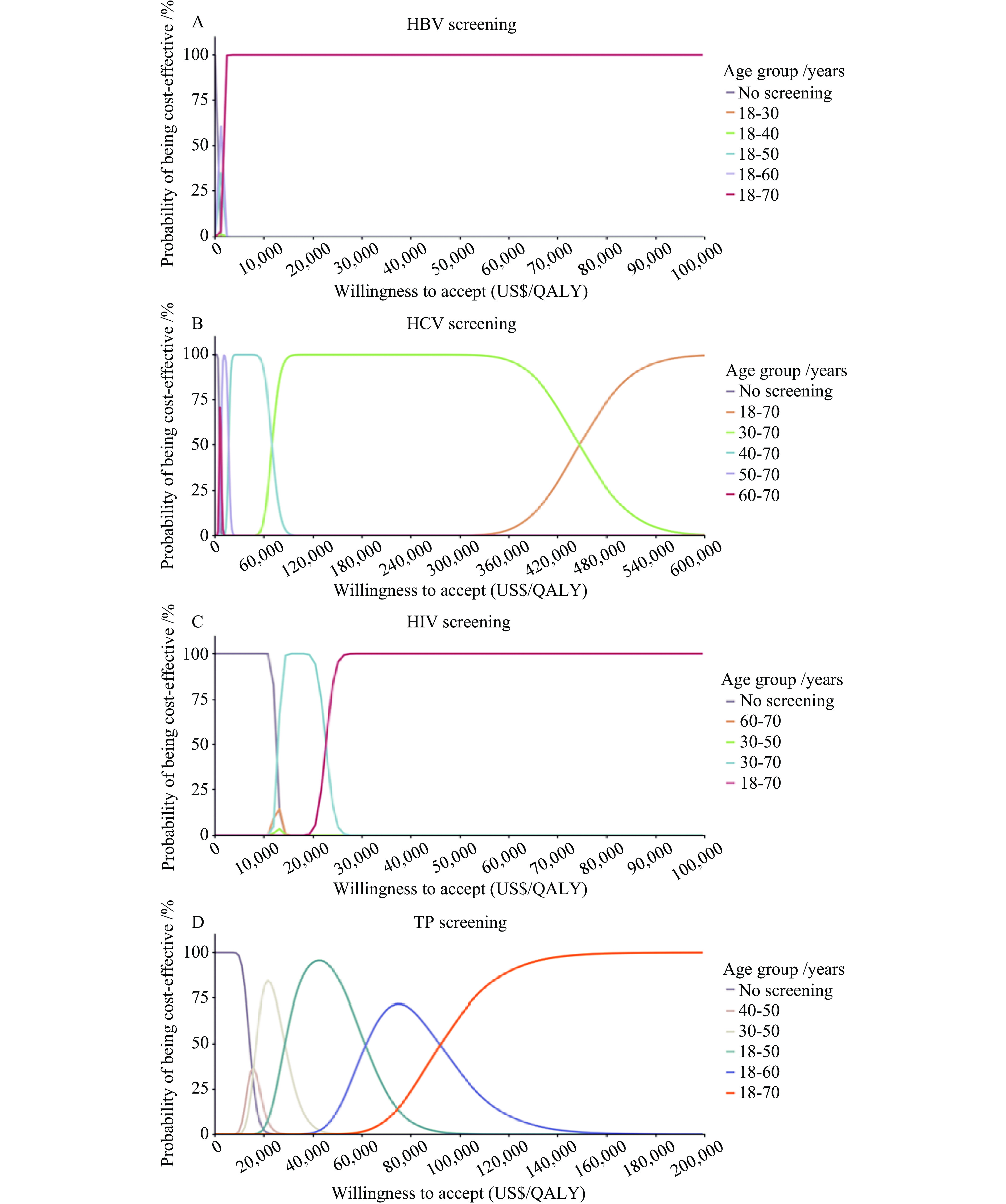
Strategies that never had the highest probability of being cost-effective across the evaluated willingness-to-accept thresholds are not shown. HBV = Hepatitis B virus; HCV = Hepatitis C virus; HIV = human immune deficiency virus; TP = Treponema pallidum; QALY = quality-adjusted-life-year.
The tornado diagram illustrates the ten parameters that had the greatest impact on the model outcomes (Figure 3). Across most scenarios, the most influential parameters included screening costs, treatment cost, and utility values for different stages of infection. Variations in the majority of parameters did not qualitatively alter the main conclusions under the predefined WTA threshold.
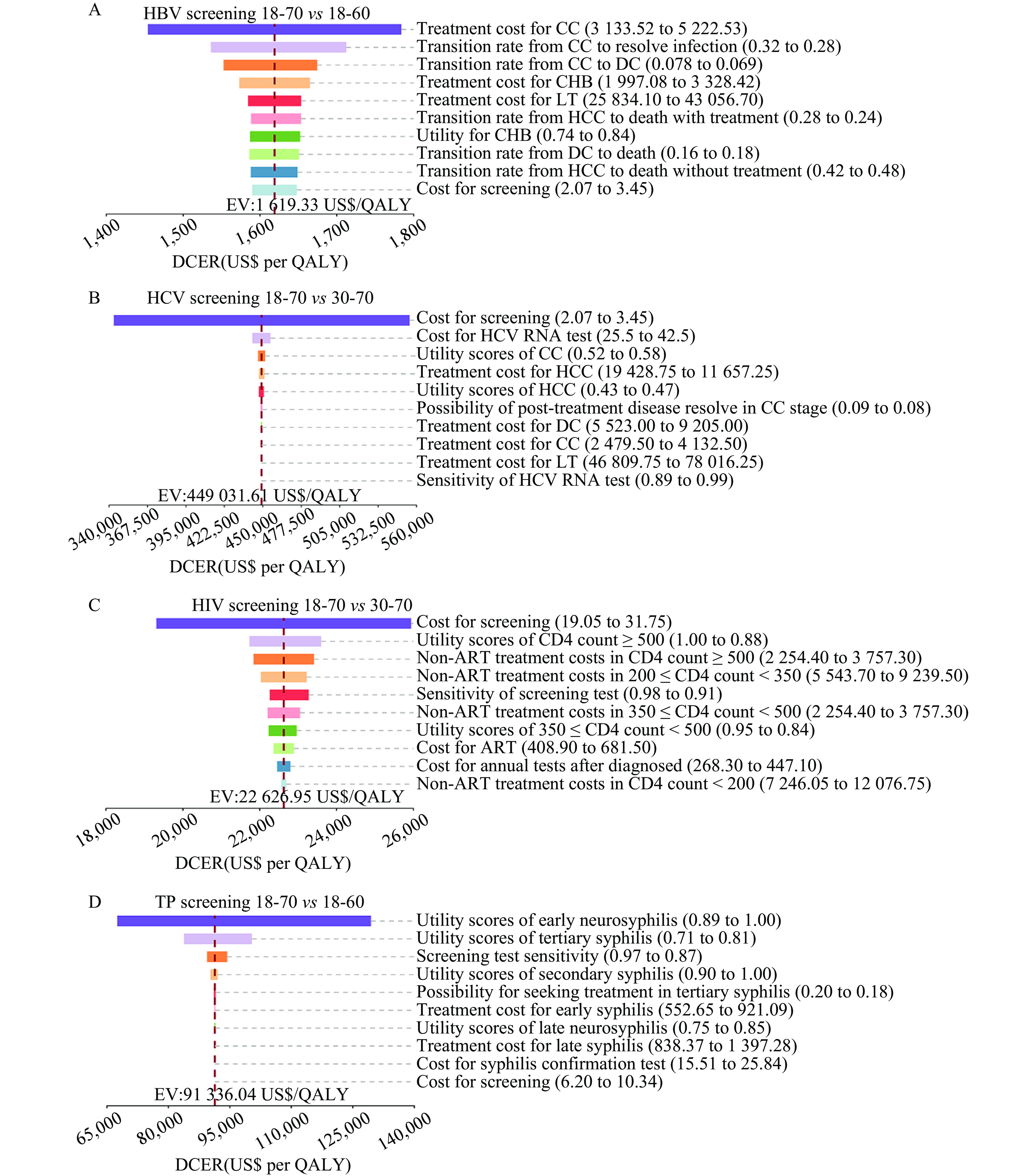
HBV = Hepatitis B virus; HCV = Hepatitis C virus; HIV = human immune deficiency virus; TP = Treponema pallidum; CC = compensated cirrhosis; DC = decompensated cirrhosis; CHB= chronic hepatitis B; LT = liver transplantation; HCC = hepatic carcinoma; ART = antiretroviral therapy; ICER = incremental cost-effectiveness ratio; QALY = quality-adjusted life-year.
Discussion
Preoperative laboratory testing contributes substantially to healthcare expenditures, and a large body of research has questioned the necessity of routine testing before elective surgery, especially among ambulatory patients.[1,18] Our analyses revealed that the current practice of routinely screening for HBV, HIV and syphilis before elective surgery in China is cost-effective, whereas HCV screening could be restricted to individuals aged 40 years and older.
Several guidelines in HICs recommend against routine preoperative laboratory testing for ambulatory patients.[13,19] However, considering the differences in disease prevalence, awareness rates, and healthcare costs across countries, decisions regarding routine preoperative testing for blood-borne infections should be tailored to local contexts. Specifically, higher infection rates, a greater proportion of undiagnosed cases, and lower costs for personnel, clinical examinations, and treatment in LIMCs may enhance the cost-effectiveness of preoperative testing. However, to our knowledge, few studies have evaluated the cost-effectiveness of preoperative laboratory testing before elective surgery in LMICs, and none have been conducted specifically in China.[19]
The debate over the implementation of routine HIV screening has perisited for decades.[20-21] The 2008 British HIV Association (BHIVA) guidelines recommend that all non-emergency patients undergo HIV screening,[22] while the UK National Institute for Health and Care Excellence (NICE) recommends testing all patients undergoing elective surgery in areas with an HIV prevalence >2 per 1000.[23] The U.S. Preventive Services Task Force (USPSTF) recommends routine HIV screening for individuals aged 16–65 years.[21] Currently, no specific guidelines exist in China regarding preoperative HIV screening. A study in Shanghai reported a favorable cost-utility ratio for preoperative HIV screening among 11,609 patients undergoing joint replacement.[24] Consistent with this, our study found that preoperative HIV screening for individuals aged 18 to 70 years is cost-effective. Overall, existing evidence generally supports routine preoperative HIV screening.
Many countries and regions have launched comprehensive initiatives to prevent and control syphilis.[25] However, previous studies have primarily focused on screening among pregnant women or other high-risk populations, such as individuals with HIV/AIDS or men who have sex with men attending sexual health clinics.[26-27] While prenatal screening for syphilis has generally been found to be cost-effective,[28] our study provides further evidence that preoperative syphilis screening for individuals aged 18 to 70 years is also cost-effective in the surgical setting.
The cost-effectiveness of HBV screening in the general population varies across studies from different countries.[29-30] For instance, HBV screening prior to chemotherapy was found to be cost-effective in a US study,[31] but not in Australian study.[32] This discrepancy highlights the importance of tailoring public health measures to local contexts, as their effectiveness and economic viability are highly dependent on regional epidemilogical and economic conditions. Consistent with a previous study in China, we found that preoperative HBV testing is cost-effective.[24] However, restricting HCV screening to individuals aged 40-70 years was found to be more cost-effective than universal screening (ages 18-70 years). This is likely because younger individuals take longer to develop sequelae, and most infected people can live for extended periods without significant impairment in their health-related quality of life. Meanwhile, HCV treatment remains relatively expensive and resource-intensive. Variations in prevalence and healthcare costs lead to differing conclusions regarding the cost-effectiveness of preoperative HCV screening globally. For example, preoperative HCV testing is not considered cost-effective in the USA and Germany.[19,33] whereas a European meta-analysis demonstrated favorable cost-utility for preoperative HCV testing.[34] Similarly, general population screening was found to be cost-effective in The Gambia.[29] Conversely, a previous study in China concluded that preoperative HCV testing was not cost-effective.[24] Clearly, more evidence is needed to guide optimal clinical practices and inform policymaking.
This study has several limitations. First, data for certain parameters in the economic model, including costs and utilities, could not be derived from Chinese populations due to a lack of published data. Second, we modeled one-time screening event to estimate the population-level value of detecting previously undiagnosed infection; repeated testing before multiple procedures would increase cumulative screening costs and likely reduce marginal benefits, especially when prior test results are available. Third, while our analysis included direct medical costs, reimbursement rates, institutional accounting costs, patient out-of-pocket expenses, transportation costs, and indirect productivity losses were not explicitly modeled. Furthermore, these findings are most directly applicable to low-risk elective ophthalmic surgeries and should be generalized with caution to emergency surgeries, high-risk invasive procedures, or surgical settings with substantially different infection prevalence, occupational exposure risk, or perioperative management pathways. The exact impact of these unmodeled factors on our findings is unknown, although the robustness of our results across sensitivity analyses suggests this impact is likely minimal. Finally, regarding occupational exposure risks for surgical staff, we emphasize that adherence to universal precautions should supersede reliance on universal preoperative screening.[35]
In conclusion, for low-risk elective ophthalmic surgery in China, our study found that routine preoperative screening for HBV, HIV, syphilis, and HCV (limited to individuals aged 40 and older) was cost-effective. However, the cost-effectiveness of such screening can vary significantly across countries and regions, depending on local infection prevalence, the proportion of undiagnosed cases, and healthcare costs. These findings underscore the importance of evaluating local epidemiological and exonomic contexts to guide the development of tailored, evidence-based health policies.
Correction notice
None
Acknowledgements
None
Author contributions
(I) Conception and design: Xiaotong Han, Jiaqing Zhang, Nathan Congdon, Lei Zhang, Lixia Luo, and Yizhi Liu
(II) Administrative support: Nathan Congdon, Lei Zhang, Lixia Luo, and Yizhi Liu
(III) Provision of study materials or patients: Xiaoxun Gu, Xiaoting Ruan, Xiaoyun Chen, Guangming Jin, Lanhua Wang, and Ye Dai
(IV) Collection and assembly of data: Xiaotong Han, Jiaqing Zhang, Xiaoxun Gu, Xiaoting Ruan, Xiaoyun Chen, Guangming Jin, Lanhua Wang, and Ye Dai
(V) Data analysis and interpretation: Xiaotong Han, Jiaqing Zhang, Zhuoru Zou, Yueye Wang, and Wei Wang
(VI) Manuscript writing: All authors
(VII) Final approval of manuscript: All authors
Conflict of interests
The authors declare that they have no conflicts of interest. All authors have completed the ICMJE uniform disclosure form.
Patient consent for publication
None
Ethics approval and consent to participate
None
Data availability statement
None
Open access
This is an Open Access article distributed in accordance with the Creative Commons Attribution NonCommercial-NoDerivs 4.0 International License(CC BY-NC-ND 4.0), which permits the non-commercial replication and distribution of the article with the strict proviso that no changes or edits are made and the original work is properly cited(including links to both the formal publication through the relevant DOI and the license).
Supplementary materials
The supplementary materials are available online at: https://journal.gzzoc.org.cn/es/article/6370.
Declaration of generative AI use
No generative artificial intelligence (GenAI) tools were used in the preparation of this manuscript.