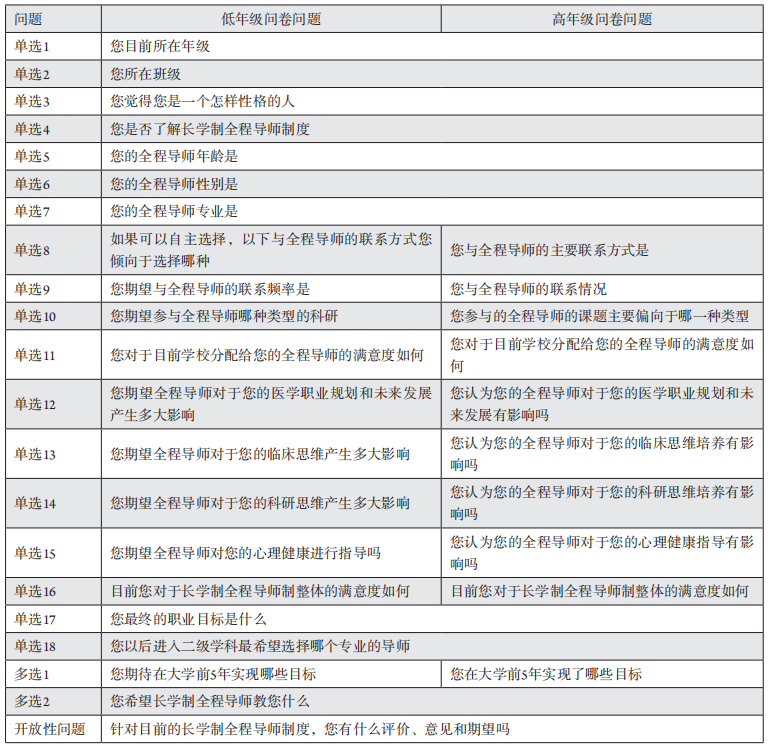
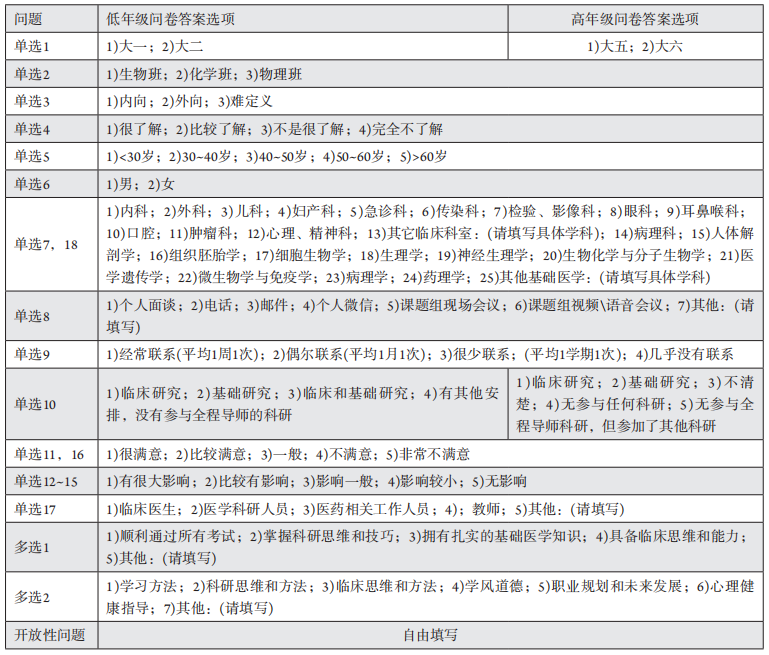
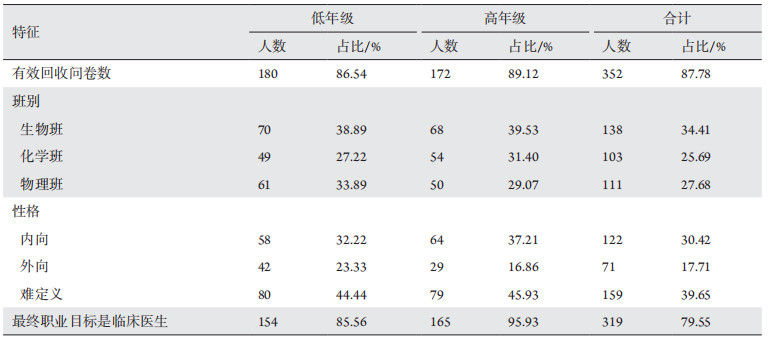
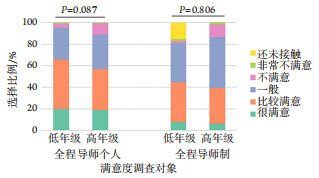
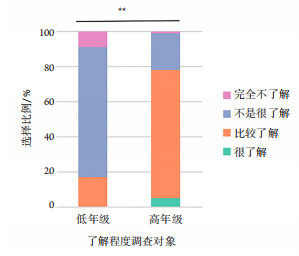
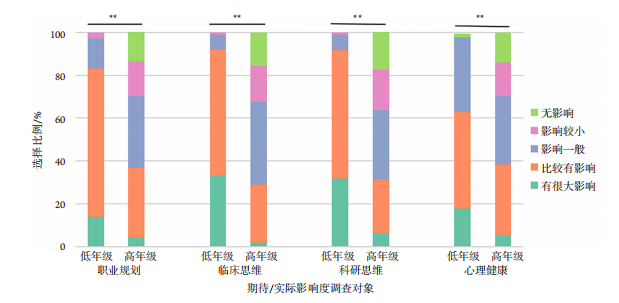
目的:了解八年制医学生对全程导师的教学需求与满意度。方法:将中山大学八年制临床医学生分为低年级、高年级两组,均进行匿名线上问卷调查。分析问卷结果,并比较两组间的不同。结果:回收问卷352份。学生对导师个人“比较满意”占比高(低年级45.56% vs 高年级37.79%,P=0.087),对全程导师制度“比较满意”占比高(低年级 36.67% vs 高年级33.14%,P=0.806)。对全程导师制度“很了解”与“比较了解”的学生在低年级中明显低于高年级的占比(16.67% vs77.91%,P<0.001)。低年级学生期待全程导师在职业规划、临床思维、科研思维、心理健康发挥较大影响的占比均高于高年级的实际评估(构成比4个方面均P<0.001,选择“有很大影响”及“比较有影响”在低、高年级占比分别为83.33% vs 36.63%,92.22% vs 29.07%,91.67% vs 31.39%,62.78% vs 38.37%)。结论:学生对全程导师个人及制度均较满意,但存在低年级对该制度了解少、师生联系少、导师实际作用低于学生预期、科研训练机会不足等问题。亟需完善全程导师制,推动临床医学高水平人才的培养。
Figure 5 Expected or actual effffect of whole-course tutors on career planning, clinical thinking, scientific research thinking, and mental health of the students between the two groups (**P<0.001)
1 )开展全程导师制介绍会。选择对全程导师制“很了解”与“比较了解”的学生在低年级学生中占比明显低于在高年级学生中占比(16.67% vs 77.91%,P<0.001)。学生随着年级的升高,逐渐认识了解全程导师制。但是早期全面了解全程导师制更能发挥全程导师制的作用,因此医学院校应该在学生低年级的时候尽早开展全程导师制介绍会以便学生更好了解全程导师制。
2 )搭建师生互动平台。低年级学生期待与全程导师“经常联系”与“偶尔联系”占比明显高于高年级学生实际联系情况(90.00% vs 24.42%,P <0.001)。且低年级学生入学至今对全程导师制“还未接触”占15.56%。一方面可能是由于全程导师专业多是外科等比较忙的临床科室,全程导师没有空闲的时间与学生联系;另一方面可能是受学生性格影响,学生不够积极主动与全程导师联系。针对这些问题应该搭建师生互动平台,鼓励学生多与全程导师交流,多开展全程导师与学生的座谈会,通过面对面交流,学生可以提出自己学习、生活中遇到的困惑,请全程导师解疑。
3 )完善全程导师遴选、培训、考核、奖惩制度。低年级学生期待全程导师在职业规划、临床思维、科研思维、心理健康发挥较大影响的占比均高于高年级的实际评估( 4个方面的构成比均P <0.001,选择“有很大影响”及“比较有影响”在低、高年级占比分别为83.33% vs 36.63%,92.22% vs 29.07%,91.67% vs 31.39%,62.78% vs 38.37%)。且高年级学生认为全程导师对医学职业规划和未来发展、临床思维、科研思维、心理健康指导“无影响”的同学都占有相当一部分(13.00%~18.00%)。从这些现状说明了全程导师制落实不够到位。全程导师制有章可循才能更好实施。医学院校应制定全程导师遴选制度,选择具有较强临床和科研能力、拥有较好医学素养、有教学经验的老师担任全程导师,并且完善全程导师培训、考核、奖惩制度。其中奖励制度很有必要,因为全程导师本身临床、科研、教学各方面压力很大,如果没有长效奖励机制,将大大影响全程导师积极性[13]。医学院校应该对于成绩突出的全程导师予以表彰,将全程导师的成绩量化纳入年终考核、职称评定以及职位晋升等。全程导师制有效实施对学生素质培养尤为重要。目前中山大学临床八年制历届学生的全程导师制师生比约为1:3,每个年级有33~36个全程导师,全程导师队伍人员尚比较充足。进一步扩充全程导师队伍以使八年制学生在进入二级学科前得到更充分的指导,是未来全程导师制的发展方向之一,这时需要解决导师相对较少的问题。针对目前全程导师制现状,亟需完善完善全程导师遴选、培训、考核、奖惩制度,让全程导师制落实到位。全程导师选拔制度的进一步完善,有利于激励医学院校符合标准的优秀老师争当全程导师,扩大全程导师队伍,更好促进八年制人才的培养。全程导师选拔制度的完善是我们在进一步工作、研究中需要探讨和解决的问题。
4 )全程导师尽可能提供学生科研机会。低年级学生期待参与全程导师科研比率高于高年级学生实际参与科研比率(97.78% vs 38.37%,P<0.001)。且高年级中37.21%学生完全未接触任何科研。八年制培养方案中后期学生会面临临床轮转的压力与科研训练的压力交织一起的情景,很大程度上影响了学生科研热情,有碍于学生科研能力的提高[14]。因此,应该提倡尽早接触科研。美国医学院提倡医学生尽早接触临床科研项目,哈佛大学和斯坦福大学医学院在学生入学早期就开设科研相关课程,目的在于提高基于科研思维的临床问题解决能力[15]。早期科研训练有助于八年制医学生多方面能力培养,比如文献检索能力、团队协作能力等[16]。医学院校应该在学生低年级时重视课外科研训练课程的建设,全程导师应尽可能提供学生科研机会,学生应该在早期积极主动与全程导师联系并参与科研活动。
5 )全程导师职责定位进一步明确。低年级学生期待大学前5年能够“顺利通过所有考试、掌握科研思维和技巧、拥有扎实的基础医学知识、具备临床思维和能力”占比明显高于实际上高年级学生最终实现这些目标的占比(73.89% vs 22.09%,P <0.001)。这个调查结果可能是由于学生对自身能力和课程难度认识不足,目标定位不明确,定下过高目标。从另一个角度考虑也说明了全程导师制在八年制医学生培养过程中具有重要意义。全程导师应该职责定位明确,发挥其“三导”作用,引导学生制定学习计划、培养学生终身学习能力,同时注意做好心理辅导。全程导师应该结合八年制课程培养体系,在不同阶段给予学生不同的帮助,引导学生定下客观的目标,制定合理的学习方案,做好时间规划。结合高低年级学生期待全程导师教导内容,我们可以得出新时期全程导师应该尽可能教导学生的内容包括:学习方法、科研思维和方法、临床思维和方法、学风道德、职业规划和未来发展、心理健康指导等。
1. 中山大学教学改革基金 ( JX3030604024)。This work was supported by the Teaching Reform Fund of Sun Yat-sen
University, China ( JX3030604024).
参考文献
1. 邹丽琴. 中国八年制医学教育培养模式研究[D]. 重庆: 第三军
医大学, 2013.
ZOU Liqin. A study on the training model of eight-year medical
education in China[D]. Chongqing: Third Military Medical
University, 2013.
2. 刘道洪, 陈豪, 王海明, 等. 八年制医学教育临床导师制探索[ J].
中华医学教育探索杂志, 2014, 13(5): 448-451.
LIU Daohong, CHEN Hao, WANG Haiming, et al. Exploration and
reflection on clinical tutorial system in eight-year program medical education[ J]. Chinese Journal of Medical Education Research, 2014,
13(5): 448-451.
3. 夏欧东, 曾志嵘, 周增桓, 等. 临床医学八年制阶段导师制的探索
与思考[ J]. 中国现代医生, 2010, 48(14): 119-127.
XIA Oudong, ZENG Zhirong, ZHOU Zenghuan, et al. Exploration
and thinking about staged tutorial system for sight-year clinical
medicine program[ J]. China Modern Doctor, 2010, 48(14): 119-127.
4. 邹丽琴. 八年制医学教育的探索与实践[ J]. 医学教育探索, 2008,
7(3): 225-226.
ZOU Liqin. Research on and practice of eight-year medical
education[ J]. Chinese Journal of Medical Education Research, 2008,
7(3): 225-226.
5. 徐睿, 徐柳菁, 钱政宇. 中山大学中山医学院八年制医学前教育
的现状与思考[ J]. 课程教育研究, 2016(28): 249-250.
XU Rui, XU Liujing, QIAN Zhengyu. The current situation and
thinking of the eight-year pre-medical education in Zhongshan School
of Medicine of Sun Yat-sen University[ J]. Course Education Research,
2016(28): 249-250.
6. 陈少锐, 刘鹏, 吴映莉, 等. 中山大学八年制医学生全程导师制的
实践与探索[ J]. 中国高等医学教育, 2019(2): 123-124.
CHEN Shaorui, LIU Peng, WU Yingli, et al. A whole process tutorship
for eight-year medical program of Sun Yat-sen University[ J]. China
Higher Medical Education, 2019(2): 123-124.
7. 张海松, 李林倩, 周金娜, 等. 全程临床导师制应用于高年级临床
医学生培养[ J]. 医学研究与教育, 2019, 36(1): 68-71.
ZHANG Haisong, LI Linqian, ZHOU Jinna, et al. The research of
the whole clinical tutorial system in the cultivation of senior clinical
medical students[ J]. Medical Research and Education, 2019, 36(1):
68-71.
8. 鲁映青, 孙利军, 丁悦娜, 等. 基础医学人才培养的创新探索[ J].
中国高等医学教育, 2005(3): 49-51.
LU Yingqing, SUN Lijun, DING Yuena, et al. Innovation of training
talents for preclinical medicine[ J]. China Higher Medical Education,
2005(3): 49-51.
9. 丁冰清, 麦菁芸, 朱将虎. 关于八年制医学生实行本科生导师制
的几点思考[ J]. 教育教学论坛, 2019(12): 22-23.
DING Bingqing , MAI Jingyun, ZHU Jianghu. Reflections on
implementing undergraduate tutor system on eight-year medical
students[ J]. Education and Teaching Forum, 2019(12): 22-23.
10. 刘忠锦, 孙茂林, 张海燕, 等. 导师制模式下医学本科生培养及评
价体系探索[ J]. 中华医学教育探索杂志, 2019, 18(5): 458-461.
LIU Zhongjin, SUN Maolin, ZHANG Haiyan, et al. An exploration of
the training and evaluation systems of medical undergraduates in the
context of tutorial system[ J]. Chinese Journal of Medical Education
Research, 2019, 18(5): 458-461.
11. 李亚敏, 陈俊国. 临床医学八年制的现状分析与思考[ J]. 中国高
等医学教育, 2010(4): 117-118.
LI Yamin, CHEN Junguo. Analysis on status of eight-year program
for clinical medical education[ J]. China Higher Medical Education,
2010(4): 117-118.
12. 王淑珍, 肖海鹏, 王庭槐. 全面推进临床医学教育综合改革[ J].
中国高等教育, 2014(15): 29-32. WANG Shuzhen, XIAO Haipeng, WANG Tinghuai. Fully promote
comprehensive reform of clinical medical education[ J]. China Higher
Education, 2014(15): 29-32.
13. 张华纲, 宋红松, 樊东升. 传统模式与导师制在八年制医学生临
床实习中的比较与思考[ J]. 中国高等医学教育, 2017(2): 121-122.
ZHANG Huagang, SONG Hongsong, FAN Dongsheng. Comparison
and thinking of traditional model and tutorial system in clinical practice
of eight-year program medical students[ J]. China Higher Education,
2017(2): 121-122.
14. 金晶, 马超, 高小惠. 八年制临床医学生科研能力培养模式的比
较研究[ J]. 中国高等医学教育, 2016(8): 1-2.
JIN Jing, MA Chao, GAO Xiaohui. A comparative study of research
skills development for students of eight-year clinical medicine
programs[ J]. China Higher Education, 2016(8): 1-2.
15. 邹丽琴, 罗长坤, 黄建军, 等. 美国医学生科研能力培养对我国
八年制医学教育的启示[ J]. 中华医学教育杂志, 2013, 33(4):
638-640.
ZOU Liqin, LUO Changkun, HUANG Jianjun, et al. Developing
research skills in medical students in the US: implications for eight-year
program design in China[ J]. Chinese Journal of Medical Education,
2013,33(4): 638-640.
16. 余乐, 李琳, 刘叔文. 医学八年制学生基础阶段科研能力培养的
探索[ J]. 医学信息(上旬刊), 2011, 24(6): 3663-3665.
YU Le, LI Lin, LIU Shuwen. Exploration of patterns of early scientific
research training for eight-year medical students[ J]. Medical
Information, 2011, 24(6): 3663-3665.

'%20fill='white'%20fill-opacity='0.01'/%3e%3cmask%20id='mask0_3477_29692'%20style='mask-type:luminance'%20maskUnits='userSpaceOnUse'%20x='0'%20y='0'%20width='16'%20height='16'%3e%3crect%20id='&%23232;&%23146;&%23153;&%23231;&%23137;&%23136;_2'%20x='16'%20width='16'%20height='16'%20transform='rotate(90%2016%200)'%20fill='white'/%3e%3c/mask%3e%3cg%20mask='url(%23mask0_3477_29692)'%3e%3cpath%20id='&%23232;&%23183;&%23175;&%23229;&%23190;&%23132;'%20d='M14%205L8%2011L2%205'%20stroke='%23333333'%20stroke-width='1.5'%20stroke-linecap='round'%20stroke-linejoin='round'/%3e%3c/g%3e%3c/g%3e%3c/svg%3e)